
Over the past few months, the UK-HyRES Early Career Researcher (ECR) Webinar Series, led by ECR Chair Dr Sibimol Luke, has brought together researchers from across the hydrogen community to explore some of the key challenges and opportunities facing researchers today.
From securing funding and commercialising research to managing workloads, building your professional profile and navigating the growing role of AI, the series has provided practical insights, expert advice and opportunities to connect with fellow researchers.
In total, the series attracted over 230 attendees across 5 webinars, demonstrating strong demand for professional development opportunities tailored to the needs of ECRs.

Topics We’ve Covered
Commercialising Your Research – Dr Ben Voysey, Royal Society of Chemistry
This session explored how researchers can maximise the impact of their work beyond academia. Topics included intellectual property, industry collaboration, spinouts and innovation pathways, helping participants better understand how research can be translated into real-world solutions.
Writing a Good Project Proposal – Professor Chris Bowen, University of Bath
One of our most popular sessions, Professor Bowen shared practical advice on developing competitive funding proposals, communicating impact effectively and avoiding common application pitfalls.
Engineering Your Career: Sustainable Time Management for ECRs – Professor Rachael Rothman, UK-HyRES Co-Director
This highly engaging webinar focused on managing competing demands, avoiding burnout and building sustainable working practices for long-term career success. It generated one of the strongest attendance rates across the series, highlighting the importance of career sustainability for today’s researchers.
Promoting Yourself and Your Research & ECR Poster Competition Training – Karen Brooks, Deputy Director of GW-SHIFT & UK-HyRES
Combining research communication, networking and poster and pitch competition training, this session provided practical guidance on raising professional visibility, engaging with industry and communicating research with confidence.
AI for Research with Academic Integrity – Dr Yuerong Zhang, UCL
Our most popular webinar to date, this session introduced researchers to a range of AI tools that can support literature reviews, writing, evidence synthesis and research workflows, while emphasising the importance of responsible and ethical AI use.
A Growing Interest in AI
One of the most surprising insights from the series was the level of interest in our AI webinar.
Just 2 weeks before the event, only 24 people had registered. Following a targeted promotional campaign, registrations grew to 160 participants, making it the most popular webinar in the series and prompting us to increase the event capacity.
The response highlights a growing appetite among researchers to better understand how AI can support their work while maintaining academic integrity and rigour.
Missed a Webinar?
Don’t worry, many of our webinar recordings are available to watch on demand. Whether you’re looking for proposal writing tips, advice on commercialising research or guidance on using AI responsibly, there’s plenty of practical content available to explore.
Access our webinar recordings here
Join the UK-HyRES ECR Network
Want to be the first to hear about upcoming webinars, development opportunities and networking events?
By joining the UK-HyRES ECR Network, you’ll receive information on future webinars directly and be able to stay connected with researchers across the community.
Join the UK-HyRES ECR Network here: ECR Network Application Form – Fill in form
Help Shape Future Webinars
We’re always looking for ways to ensure our webinars are relevant, practical and valuable for our ECR community.
What topics would you like us to cover next?
Whether it’s:
- Career progression and academic pathways
- Fellowship and grant applications
- Industry engagement and collaboration
- Leadership and management skills
- Research impact and public engagement
- AI and digital tools for researchers
- Work-life balance and wellbeing
…or something else entirely, we’d love to hear from you. Submit your ideas here
Suggest a future webinar topic
Thank you to all our speakers and attendees who have contributed to the success of the series so far. We look forward to continuing to support the development of ECRs across the UK-HyRES community and welcoming even more researchers to future sessions.
We’ll be kicking off the Autumn series of ECR webinars in September with: Why Does Your Research Matter? An Introduction to Research Impact for ECRs on 23 September, 13:00 – 14:00, online.
Find out more and register here
The UK Industrial Decarbonisation Research and Innovation Centre (IDRIC) has been named Research Institute of the Year at the prestigious 2025 Edie Net Zero Awards in London.
Professor Marcelle McManus, Professor of Energy and Environmental Engineering in Bath’s Department of Mechanical Engineering and UK-HyRES academic, is one of IDRIC’s Research Co-Directors.
This recognition highlights IDRIC’s leadership and significant contributions toward accelerating the sustainable energy transition of industry whilst boosting competitiveness and productivity. The Edie Net Zero Awards recognise the most innovative and impactful sustainability projects, teams and individuals in the UK and beyond.
IDRIC is the UK flagship research and innovation centre, pioneering a whole-systems, place-based approach to realise green industrial futures. Bath is a partner in the centre, which is led at Heriot-Watt University. Over the past five years, it has worked with academic institutions, industry, community representatives, and policymakers to address innovation needs and integrate knowledge across various disciplines and sectors.
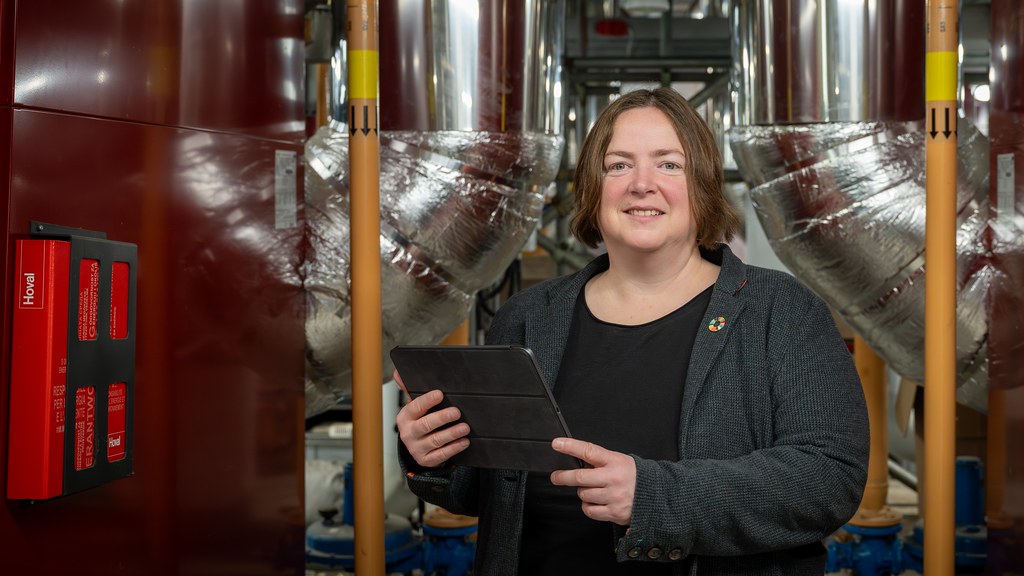
Professor Marcelle McManus, from Bath’s Faculty of Engineering & Design, is IDRIC Research Co-Director. She said: “Decarbonisation is not easy, but through our research we are bringing together industry and academia to solve long and short-term problems, driving innovation and impact in this important area.
“Through our work we are creating opportunities for innovative circular economies- pushing beyond the fossil fuel system we have inherited. Our researchers in Bath have worked with multiple industrial clusters as part of IDRIC, with a focus on understanding and optimising the wider system.”
The Edie Net Zero Awards recognise the most innovative and impactful sustainability projects, teams and individuals in the UK and beyond. This win highlights IDRIC’s leadership and contributions toward accelerating the sustainable energy transition of industry whilst boosting competitiveness and productivity.
Over the past five years, IDRIC has unified national capabilities and integrated efforts across the entire research and innovation ecosystem. During this time, the centre has delivered more than 230 project outputs from 100 research projects, along with over 60 prototypes, tools, and models.
IDRIC teams have built strong relationships with more than 12 UK industrial clusters and over 45 research institutions. They have also made over 40 policy recommendations to the UK Parliament, supported by numerous influential convening policy events. In addition to this work, IDRIC has also collaborated with skills organisations across the UK and enhanced skills and workforce diversity through secondments and training. It has also launched the EPSRC CDT in Green Industrial Futures, training 100 future leaders for the green industrial transition.
IDRIC has also launched the Net Zero Industry Visualisation Tool for the wider public – an interactive tool that allows users to explore what a green industrial future looks and guides school leavers toward potential training routes for a career in decarbonisation.
Prof. Mercedes Maroto-Valer, IDRIC’s Director, commented that “Being named the “Research Institute of the Year”, is testament to the fact that ambition, commitment and collaboration can have a real impact on the sustainable journey of our industrial heartlands to net zero. We are very honoured to receive this fantastic award among very strong competitors and remain more committed than ever to translating rigorous research into real-world impact.”
IAAPS Executive Director & UK-HyRES academic Chris Brace contributed insights and expertise for the Committee’s inquiry into skills for transport manufacturing.
Applied research and skills provision delivered by the University of Bath and IAAPS were highlighted in Parliament on Wednesday 22 October as part of the Transport Select Committee’s inquiry into skills for transport manufacturing.
The inquiry focuses on the UK’s long tradition of manufacturing motor vehicles, buses, aircraft, trains and ships, and on growing concerns within the sector about skills shortages. These industries play a vital role in local economies and supply high-quality, British-built equipment for companies both in the UK and internationally.
The Committee is examining how current and future skills needs can be met and how Government can better support the sector through targeted planning and investment.
Drawing on a recent joint University of Bath submission from IAAPS and the Institute of Coding, Professor Brace shared insights on how IAAPS’ work sits at the interface of engineering, digital innovation, education and skills — including through its Centre for Doctoral Training.
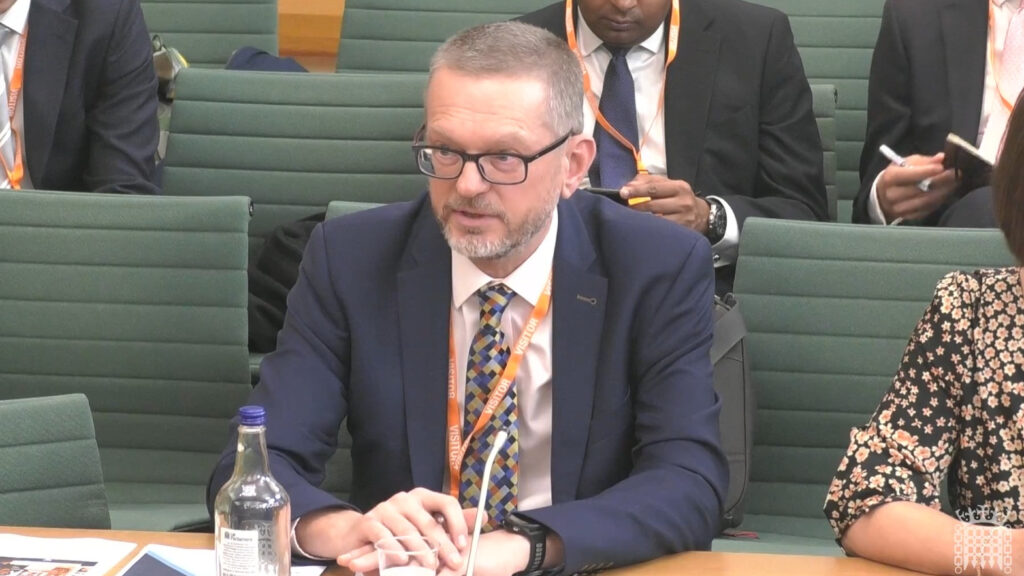
Commenting after the session, he said: “It was a pleasure to contribute to the Committee’s important inquiry into skills for transport manufacturing on behalf of the University and IAAPS.
“As the transport sector rapidly evolves in response to new technologies and sustainability challenges, we are seeing significant shifts in the types of skills needed. We work closely with industry to ensure that our training – from undergraduate programmes to doctoral research – combines academic rigour with practical application.
“Our focus is on developing engineers who can contribute from day one, and equipping researchers with the cross-disciplinary skills required to navigate complex innovation landscapes. We’re also working with industry and FE providers to address emerging skills gaps in areas such as hydrogen and cryogenics through apprenticeships and CPD.
“Universities like ours have a key role to play in supporting the sector through this transition, and we look forward to continuing that contribution.”
Professor Brace appeared on a witness panel alongside Dr Benjamin Silverstone (Associate Professor and Director, Warwick Manufacturing Group) and Oriel Petry (Senior Vice-President, Airbus).
MPs’ questions covered topics including addressing specific skills gaps in transport manufacturing, increasing uptake of STEM subjects at earlier ages, diversifying the future workforce, and strengthening collaboration between universities and industry to meet these challenges.
The Committee will report its findings and recommendations later this year.
Marcelle McManus, a Professor of Environmental Engineering at the University of Bath and UK-HyRES Hub academic, has been named one of the UK’s key sustainability figures after being announced as a finalist in the Net Zero 50 Awards.
Vote for Professor Marcelle McManus in the Net Zero 50 Awards here
The awards highlight the people in the UK most influential in helping the country toward achieving its goal of reaching Net Zero emissions by 2050. This week, the final 100 people longlisted for the award have been made public, with online voting now open.
Others on the longlist include Octopus Energy CEO Greg Jackson, Mayor of London Sadiq Khan and Ed Miliband MP, Secretary of State for Energy Security and Net Zero.
Based in Bath’s Department of Mechanical Engineering, Prof McManus researches energy and sustainability, with a focus on lifecycle assessment (LCA), the process of understanding the overall impact of processes and technologies. She is Director of the Centre for Sustainable Energy Systems, a member of the Institute of Sustainability and Climate Change, and a Research Co-Director in the Industrial Decarbonisation Research and Innovation Centre (IDRIC).
She said: “It is such an honour to be on this list. It is also really a testament to the numerous people I work with here at the University of Bath and beyond, all of whom are part of various teams working alongside me to make a real difference to industry, education and to our future.
“Critical to the success of sustainability is having buy-in, and to do this people have to be front and centre. This is the focus of the work I do with the Centre for People-led Net Zero – where we are working with several industrial clusters and organisations to get to net zero. My focus is always ensuring that work we do helps us meet our targets, but not at the cost of other things.”
“This is why we work to create and understand circular systems, where in future there will be no waste, and take a whole-systems approach, using tools such as life cycle assessment to help identify where we can make improvements to novel and existing systems. It is at this interface where we can really make positive change to local communities and create longer term global sustainability.”
Professor Tim Ibell, Dean of the Faculty of Engineering and Design, added: “What a tremendously fitting and deserved accolade for Professor Marcelle McManus to be selected to be on the Net Zero 50 Long List.
“Marcelle’s expertise, coupled with her innate energy to enact change, help to offer our world a fighting chance to reach net zero timeously, with social justice at its core. We can’t change the laws of physics, but we can change our behaviours and actions. Marcelle’s research shows the way, so it is wonderful to see her being recognised in this way.”
The voting for the final Net Zero 50 is open now and until 17 November, at the digileaders website. Public votes will be combined with judges scores to decide the Net Zero 50 and an overall winner, who will be announced on Friday 28 November at the House of Lords.
IDRIC was recognised earlier this month for the impact of its decarbonisation research, being named Research Institute of the Year at the 2025 Edie Net Zero Awards.
Find out more about how the University of Bath’s research into sustainability is making a difference in our Research with Impact profile.
On 23–24 September, UK-HyRES and HI-ACT delegates visited the Institute for a Sustainable Hydrogen Economy (INW) at Forschungszentrum Jülich, Germany, to explore synergies between UK and German hydrogen research ecosystems.
The researchers had the opportunity to engage in deep discussions on how our hubs and our governments can learn from one another and co-create solutions for a sustainable hydrogen future.
A highlight was visiting the Multi-SOFC demonstration project in Erkelenz, where hydrogen derivatives are already powering electricity and heat for a hospital, proof that research can scale and serve communities.
Together, we committed to joint work in:
- Hydrogen absorption materials
- Low-temperature SOFC
- Ammonia combustion
- Hydrogen for transport
- Energy system analysis
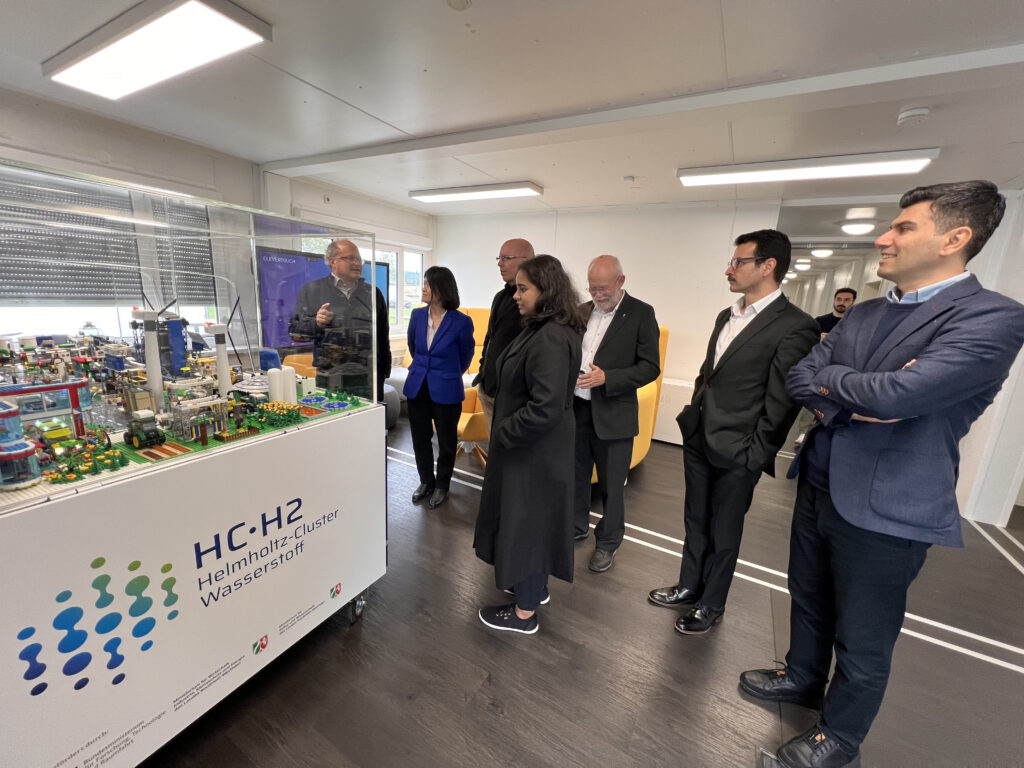
Professor Qiong Cai, Dr Martin J Smith, and Dr Sibimol Luke represented UK-HyRES. The delegates left inspired by the shared vision and the clear message: Hydrogen innovation demands global collaboration, joint research, and open knowledge exchange.
This visit is significant to UK-HyRES as the hub starts its international engagements to strengthen its research efforts and make a broader impact.
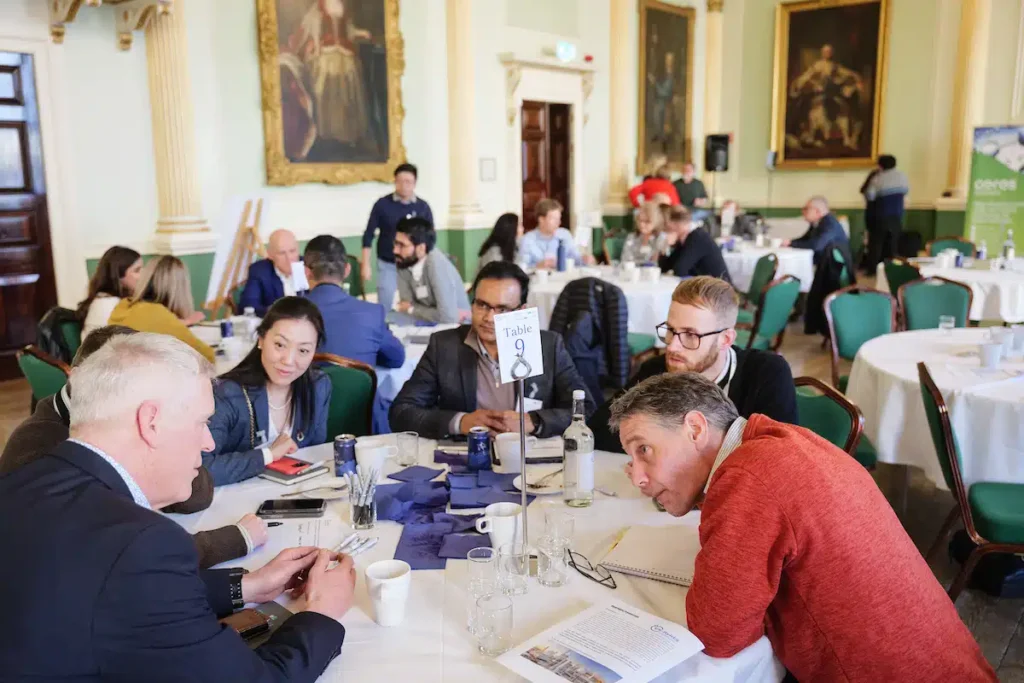
The UK HyRES Stakeholder Engagement Showcase 2025 brought together key stakeholders from academia, industry, and policy to address the challenges and opportunities in hydrogen and alternative liquid fuels. Over two days, thought leaders explored pathways to accelerate hydrogen adoption and drive innovation in support of the UK’s net zero ambitions.
Key Discussions and Insights
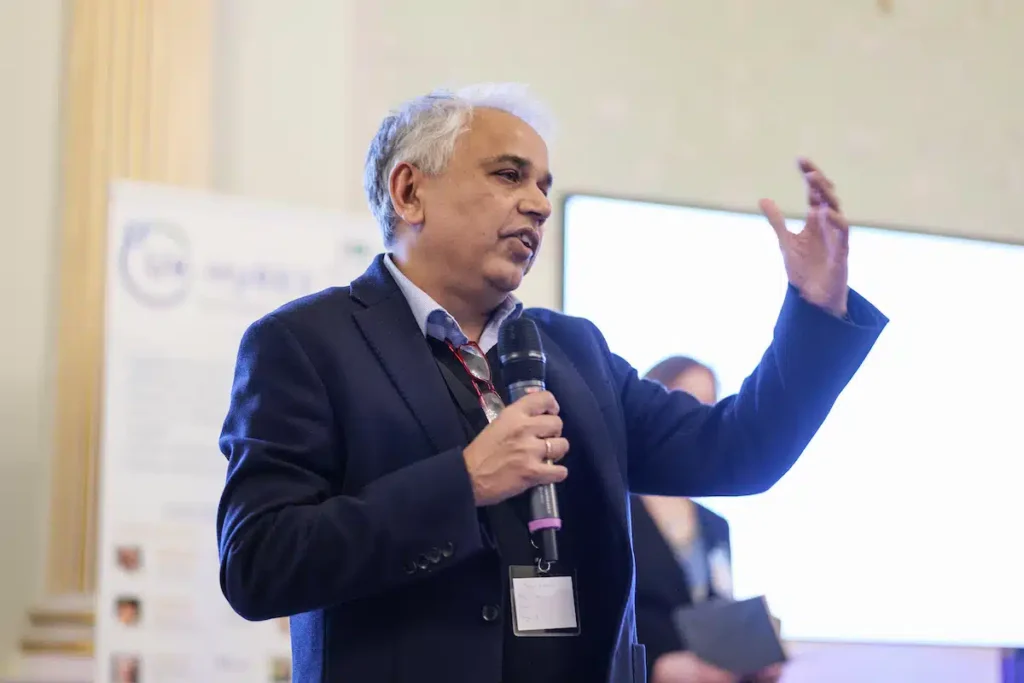
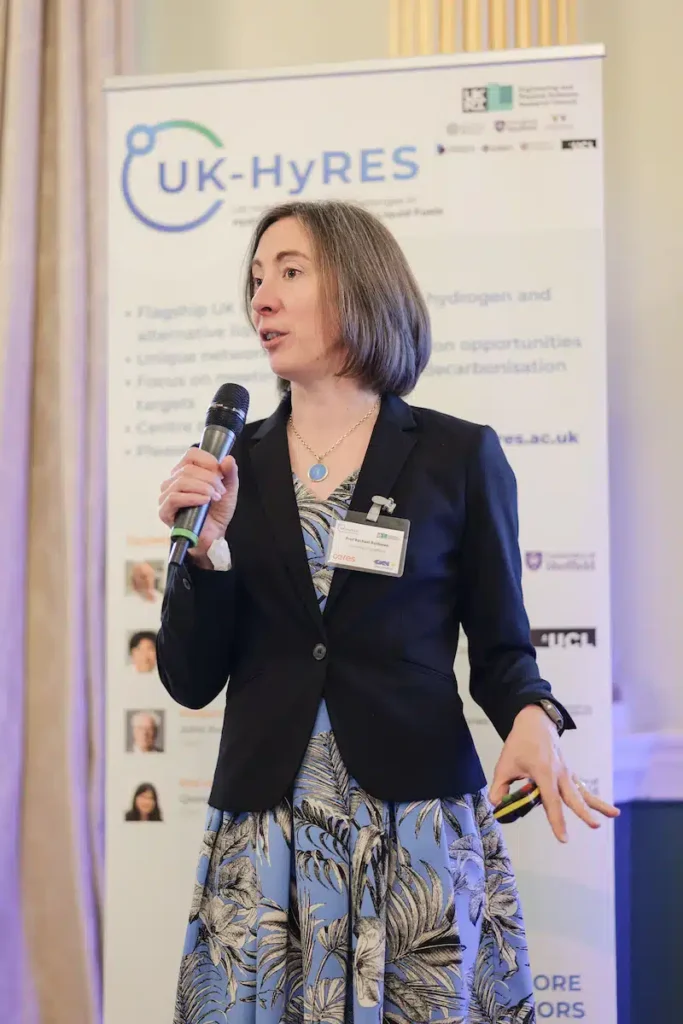
The event featured in-depth discussions on the technological, regulatory, and financial landscapes shaping the hydrogen sector. A special thanks to our plenary speakers, Dr Emma Guthrie (HEA), Dr Dan Graham (GKN Aerospace), and Dr Subhasish Mukerjee (Ceres Power), who delivered compelling presentations on hydrogen’s role in aviation and industry. Their contributions underscored hydrogen’s transformative potential and the collaborative efforts required to advance its adoption.
Hydrogen-Based Aviation Fuels
Dr Dan Graham (GKN Aerospace), a leading researcher in hydrogen-based aviation fuels, outlined how cryogenic hydrogen technology could enable zero-emission air travel. While the technology is promising, she emphasized the critical need for further research and development, particularly in handling and application expertise. Leveraging existing knowledge from industries experienced in cryogenic materials will be key to overcoming these challenges.
Policy and Regulatory Support
Dr Emma Guthrie (HEA) examined the regulatory and policy frameworks necessary for hydrogen integration into the energy mix. He highlighted the importance of sustained government involvement and the need for dedicated policy representatives to ensure long-term sector growth. A cohesive strategy that aligns research, industry expertise, and supportive policies is essential for accelerating hydrogen adoption.
Investment in Hydrogen Technologies
Dr Subhasish Mukerjee discussed the funding landscape for hydrogen technologies, stressing the importance of strategic investments in key areas such as cryogenic hydrogen and composite materials. He noted that the UK has the potential to establish a competitive advantage in these fields but requires a balanced funding approach that supports both early-stage research and the commercial scale-up of proven technologies.
Addressing Key Challenges
A significant theme throughout the showcase was the necessity of a dedicated government representative focused on hydrogen sector development. Attendees emphasized that sustained government involvement is crucial for crafting policies and funding frameworks that enable long-term innovation and deployment.
Funding remains a pivotal issue, with increased investment needed in cryogenic hydrogen and composite materials research. The UK HyRES FlexiFund was highlighted as a valuable mechanism supporting innovation across varying Technology Readiness Levels (TRLs).
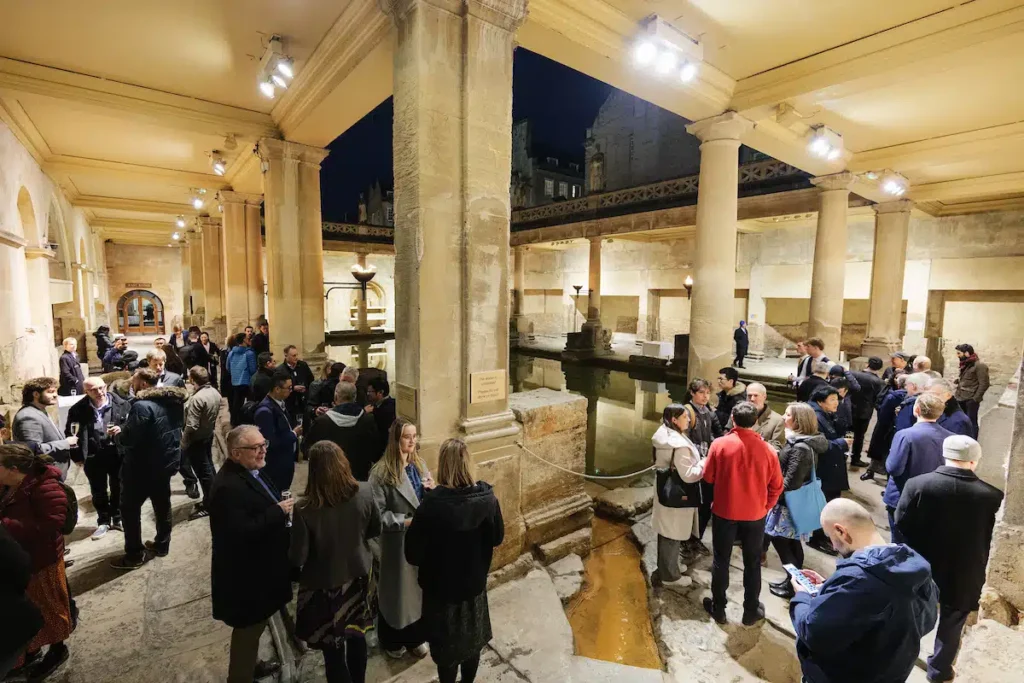
The future of hydrogen adoption also depends on an integrated supply chain, particularly for fuel cell technology. Discussions highlighted the importance of strengthening collaboration across the sector to streamline efficiencies and drive advancements. Encouraging cross-sector partnerships will be vital in overcoming current barriers and accelerating deployment.
Looking Ahead
A recurring takeaway was the necessity of continuous dialogue beyond annual events. While the showcase provided an invaluable platform for discussion, stakeholders stressed the need to maintain momentum through regular knowledge-sharing opportunities and collaborative initiatives.
Early Career Researcher (ECR) funding and joint industry-academia projects were identified as crucial next steps. Moving from discussion to actionable projects will ensure that innovation in hydrogen and alternative fuels continues to progress.
The UK HyRES Stakeholder Engagement Showcase 2025 served as a catalyst for essential conversations on hydrogen’s role in achieving net zero. However, this is just the beginning. By strengthening partnerships, securing targeted funding, and fostering innovation, hydrogen and alternative fuels can realize their transformative potential.
We look forward to continuing this journey with all stakeholders and will be sharing further insights in the coming weeks. Let’s keep the conversation going