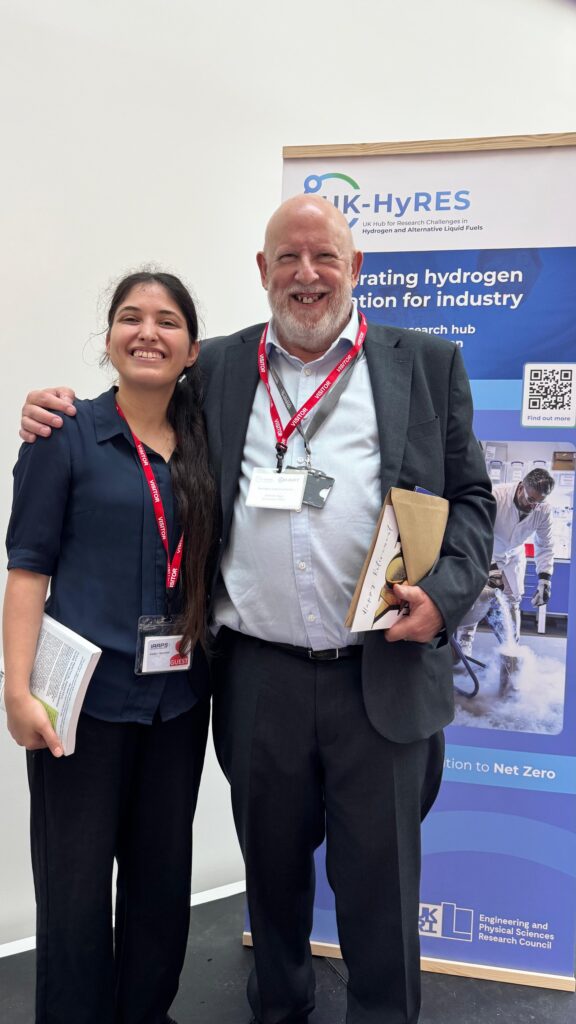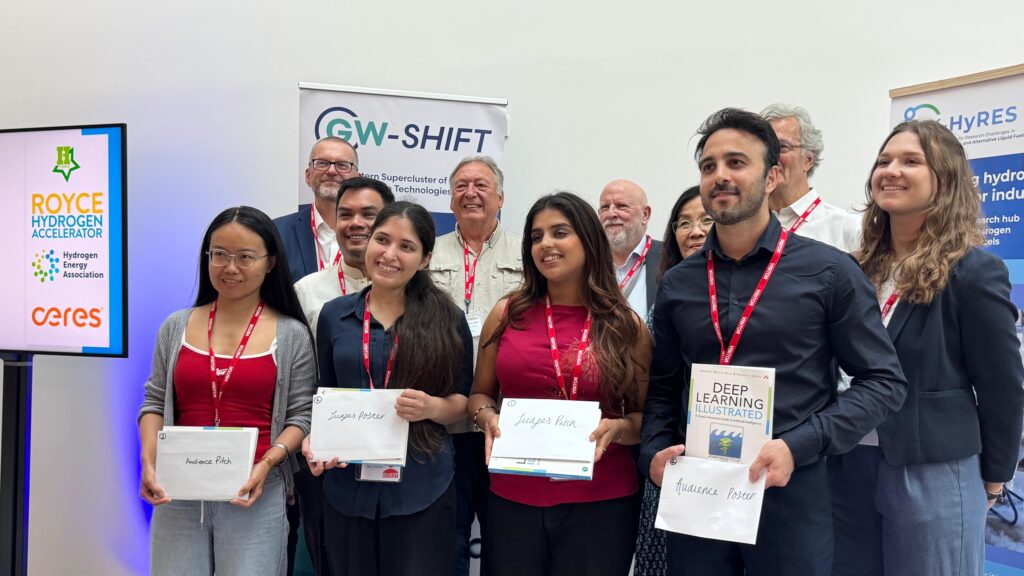
Communicating research beyond academia is an essential part of accelerating the transition to a low-carbon future. At the UK-HyRES and GW-SHIFT Hydrogen Industry Forum in July, Early Career Researchers were challenged to present their work through posters and one-minute pitches to an audience of academics, industry leaders and policymakers.
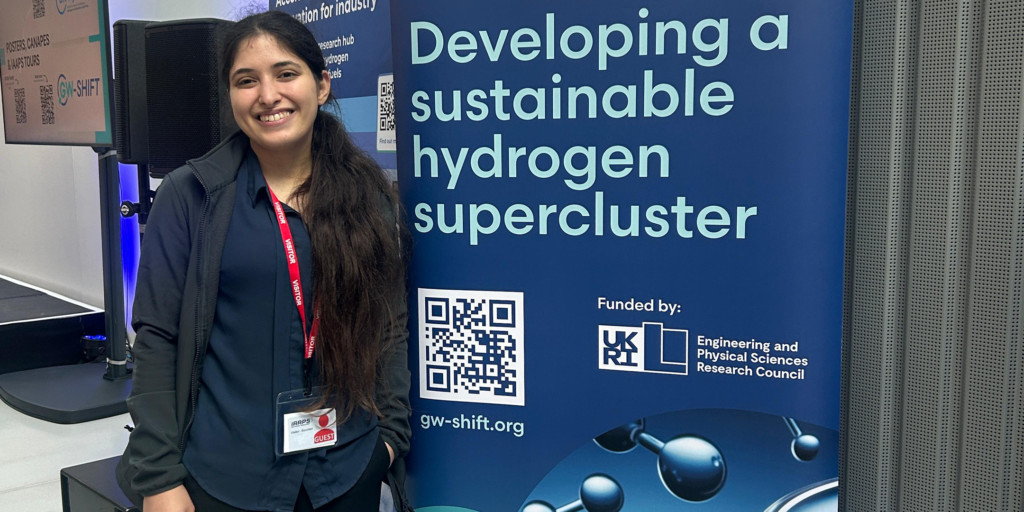
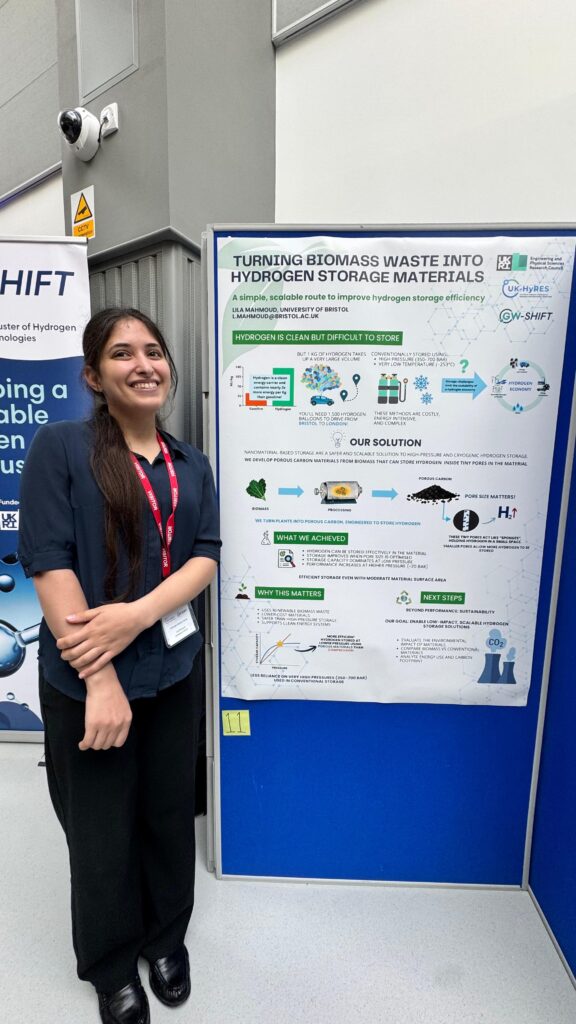
Lila Mahmoud, a PhD researcher at the University of Bristol, received the Judges’ Choice Award for her poster titled “Turning Biomass Waste Into Hydrogen Storage Materials.” By demonstrating the study’s findings, Lila impressed the judging panel with both the quality of her research and its clear relevance to the future hydrogen economy.
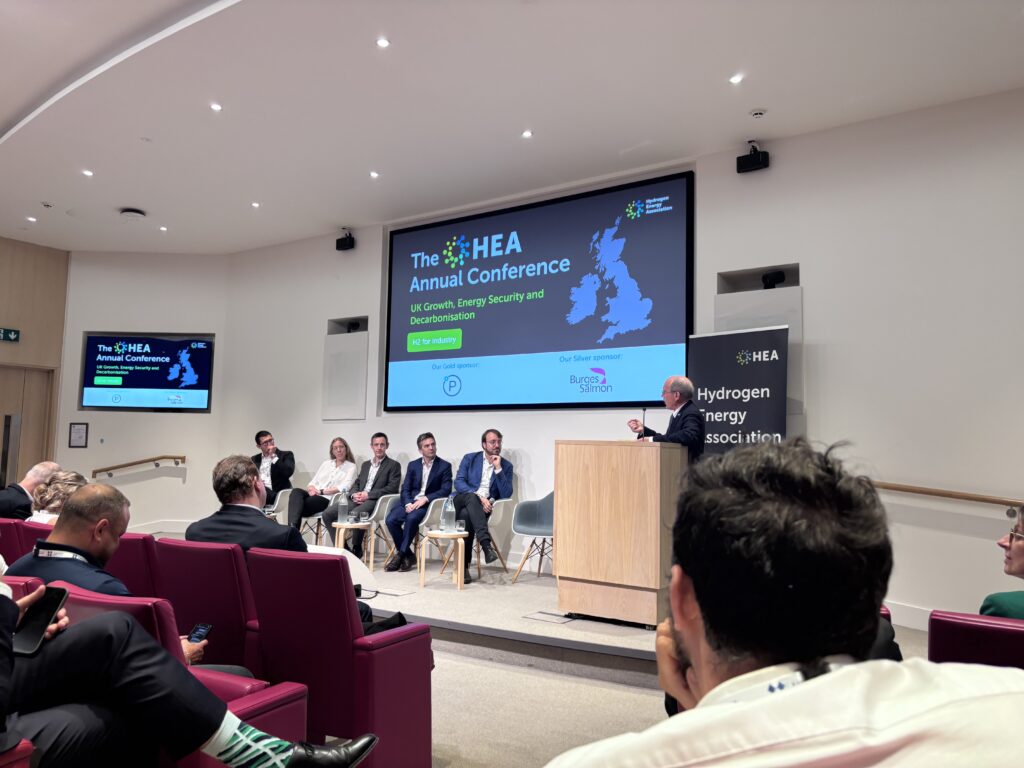
As part of her award, Lila attended the Hydrogen Energy Association (HEA) Conference, where she had the opportunity to explore the wider hydrogen landscape and engage with leaders from across industry, policy and academia. Here, she reflects on her experience.
“Attending the HEA Conference was especially valuable to me because it was my first experience of an industry-focused conference. As a PhD student working mainly in academia, I am more familiar with conferences centred on scientific methods, experimental results and academic discussion. This event introduced me to a very different side of the hydrogen sector and gave me an early opportunity to understand how research fits into a much wider system.
“My opportunity to attend came through the UK-HyRES Industry Forum, where I received the Judges’ Choice Award for my poster. Designing the poster for an industry audience was both challenging and enjoyable. Rather than focusing heavily on experimental detail, I had to present the wider problem, explain why hydrogen storage matters, and show how my research could contribute to a practical solution. This pushed me to think more carefully about impact, application and what would make the work relevant to people outside my immediate research area.
“The one-minute pitch was especially fun and a great challenge. Reducing years of research into a clear and engaging message forced me to identify what really mattered. The workshops, guidance and encouragement provided by UK-HyRES were extremely helpful throughout this process and gave me greater confidence in adapting my research for a broader audience.
“At the HEA Conference, the presentations were noticeably different from those I had encountered at academic conferences. They were geared towards investment, industry partnerships, policy and the implementation of hydrogen technologies at a systems level. It was fascinating to see how ideas that may begin in a laboratory can develop into practical projects and real-world technologies.
“The experience made me reflect on a wider question: where do we, as academic researchers, fit within this system? For me, this exposure was particularly valuable at this stage of my PhD, as it broadened my understanding of the hydrogen sector and changed how I think about the communication, direction and potential impact of my work.
“I am especially grateful to my supervisors, Dr Sanjit Nayak, Dr Jemma Rowlandson, Dr Sebastian Rochat and Professor David Fermin, for their continued guidance and support throughout my PhD and in the development of the research presented at the forum. I am also very grateful to UK-HyRES for their encouragement and for making this opportunity possible.”
Congratulations, Lila, on this fantastic achievement. Her journey from the lab to the HEA Conference is a great example of our ECR Network providing Early Career Researchers with the tools, perspectives, and industry connections needed to turn academic research into real-world impact. We look forward to seeing Lila’s continued growth, and to supporting many more ECRs in navigating their own paths to impact.