
UK-HyRES is committed to supporting the next generation of researchers in the field of hydrogen research and energy systems. We have developed an Early Career Research (ECR) Network provides a platform for early-stage researchers, PhD students, and postdoctoral fellows to connect, collaborate, and advance their careers in this rapidly evolving sector.
We recently sat down with the new Chair of Network, Dr Harmanpreet Singh from the University of Sheffield, to find out about his work and his vision for the Network going forwards.
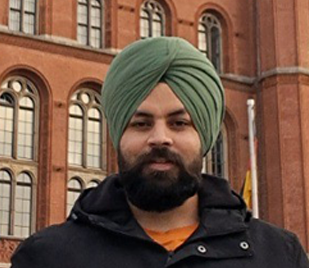
Tell us a bit about your research and background?
I’m a Postdoctoral Research Associate in Hydrogen Energy at the University of Sheffield, working within the UK-HyRES hub, where I lead research on hydrogen safety across the value chain from production through to end use. My research background sits at the intersection of thermochemical hydrogen production, process systems modelling, and safety. During my earlier work at IIT Bombay, I designed and validated an oxysteam gasification reactor to produce bio-hydrogen and power from dry agricultural residues, supported by Aspen Plus process models for hydrogen enrichment. At Sheffield I’ve extended that systems-level approach to safety-by-design risk assessment for deploying hydrogen in high-temperature industrial processes such as glass and steel. I also work on techno-economic and life cycle assessment, so I tend to look at hydrogen pathways through both an engineering and a whole-system economic and environmental lens.
Why have decided to focus on the area of green hydrogen – what excites you about it?
What drew me in is that hydrogen sits right at the heart of the hardest part of the sectors we don’t yet know how to clean up with electrification alone, like heavy industry, high-temperature heat and long-distance transport. Coming from a background in converting agricultural residues into useful energy, I’ve always been motivated by turning something under-used or scraped into something valuable, and green hydrogen is that idea at national scale. What genuinely excites me is how interdisciplinary it is, as no single discipline solves it. You need chemistry, engineering, economics, safety, and policy all pulling together, and I find that kind of problem far more rewarding than working in a narrow domain. It’s also a field where the decisions being made now will define the energy system for decades.
Why were you motivated to become the ECR chair?
Early-career researchers are the people who will actually deliver the hydrogen transition over the coming decades, yet we often navigate the hardest, most uncertain stage of our careers with limited support and voice. Having moved between institutions and countries myself, I know how much difference a strong, welcoming network makes or how isolating it can be without one. I wanted to help build that for others. Being chosen for this role by my peers and the hub is a real privilege, and it’s a chance to build on the strong foundations laid by the previous chairs while making sure the ECR community is genuinely represented in how the hub develops. I care about the people coming up behind me, and this felt like a concrete way to do something about it
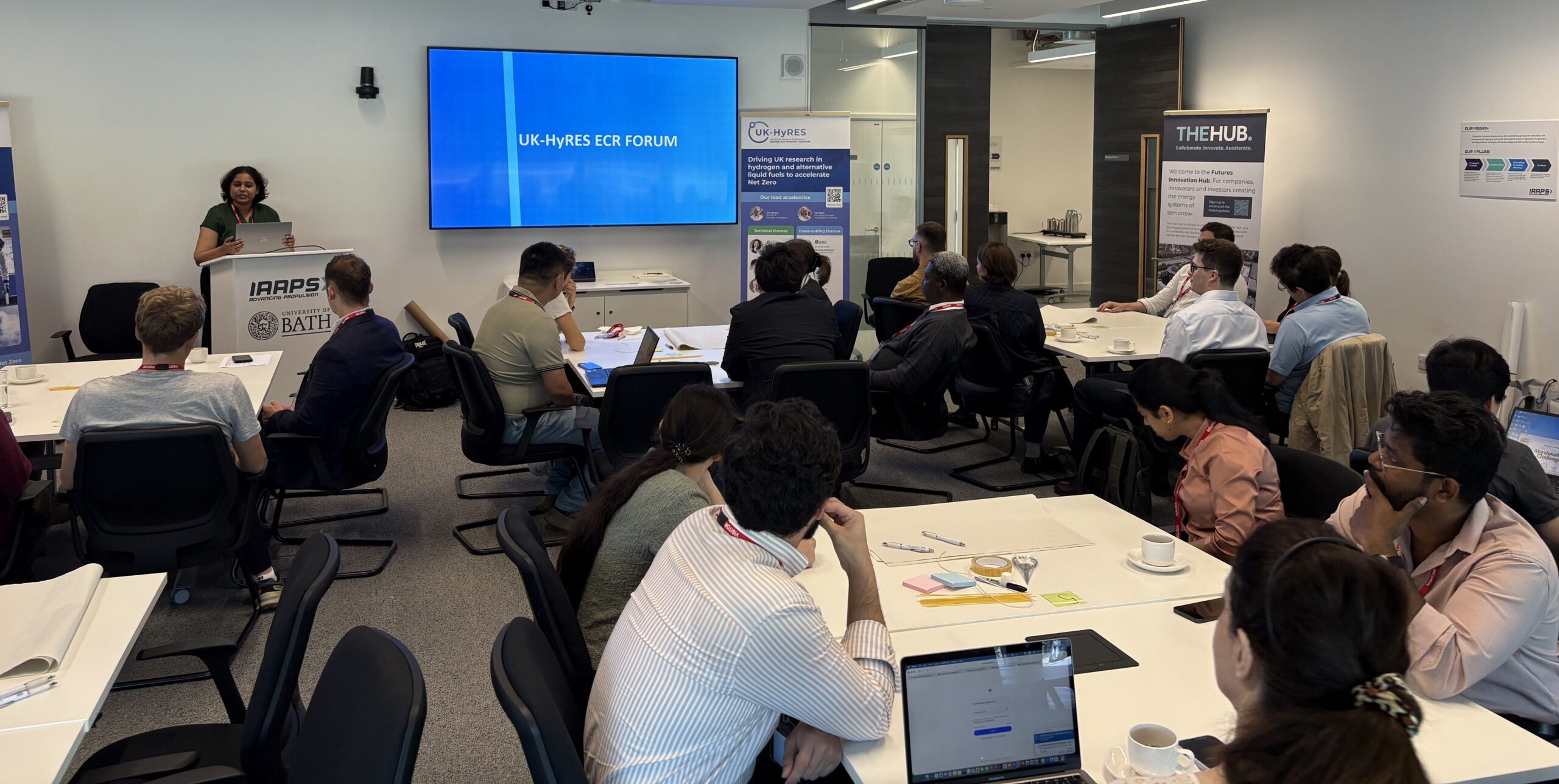
What are the key challenges face by ECRs in the hydrogen field at the moment?
Job security is the biggest one. Most of us move from one short fixed-term contract to the next, which makes it hard to plan a life, besides a research career. Beyond that, hydrogen is a fast-moving, highly interdisciplinary field, so ECRs are often expected to span engineering, economics, safety and policy without always having the training or time to do so. There’s also a real disconnect for many between academia and industry, when so much of the sector’s future is industrial. For those outside the core-funded institutions, access to funding, travel support and networks is uneven.
What are you hoping to achieve in your role as ECR chair?
My overarching aim is to leave the network stronger and more connected than I found it. Concretely, that means: making the network work just as well for our associate, affiliated and international members as it does for core members, so nobody is a second-tier participant. Turning our collective ECR voice into real influence by taking what researchers actually tell us about the barriers they face and feeding that into the hub, and where possible to funders, so it shapes decisions rather than sitting in a report. Creating opportunities that outlast any single event: durable collaborations, mentoring, and stronger links into industry. I’d measure success not by how many meetings we held, but by whether people’s careers and connections were genuinely better for being part of it.
Do you have some new initiatives in mind?
A few. I’d like to turn our national ECR survey into a concrete set of recommendations we can put to the hub and to funders, rather than just a summary of findings. I’m keen to design activities that don’t depend on travel budgets such as structured virtual collaboration, co-authorship matchmaking, shared resources. That our non-funded and international members can be genuinely active. I’d also like to build stronger, repeatable bridges to industry beyond one-off visits, and to connect our ECRs with those in the sister hydrogen hubs so everyone’s network widens. And I want to leave behind proper continuity so the network doesn’t reset each time the chair changes.
Can you share one piece of key advice or learning that has come out of your career so far that you would like to share with upcoming researchers?
Focus on the problem you’re solving, not just the papers you’re producing. It’s easy to measure a career in publication counts, but the work that has meant the most to me is the work connected to a real-world need. Keep asking who actually benefits if you get this right. That question will guide you to better problems, and it’ll keep you motivated on the hard days when the metrics alone won’t. And on those hard days, know that feeling like you don’t quite belong is far more common than anyone admits. Most researchers I respect have felt like an imposter at some point, usually right before they grew into something new. That feeling isn’t evidence you’re not good enough; more often it’s a sign you’re doing something that matters and stretching beyond what’s familiar. Don’t let it make you shrink or stay quiet. Talk to your peers, and you’ll quickly find you’re in very good company.
Find out more about the ECR Network: https://ukhyres.ac.uk/early-career-researchers/