
SPRINT Spotlight
Lin Su, Queen Mary University London
Project: Living Semiconductors for Green Hydrogen: Biosynthesis and Self-Regeneration of Nanoparticles at Engineered Bio-Abiotic Interfaces
SPRINT Spotlight
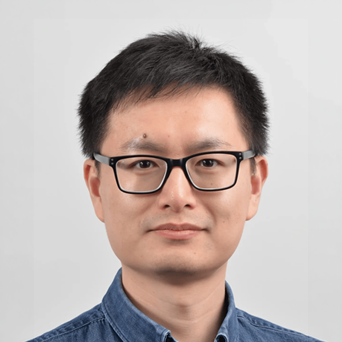 Dr Lin Su is a Lecturer in Engineering Biology at Queen Mary University of London, where he leads an independent research group. His group focuses on the engineering of biohybrid systems within the domain of Synthetic/Engineering Biology. A significant aspect of this research involves the detailed study of electron transfer mechanisms at the interfaces between microorganisms and (nano)materials. The ultimate aims of this work include the development of innovative bioelectrical communication systems and advancements in artificial photosynthesis.
He was awarded his PhD in Biomedical Engineering from Southeast University in 2021. During his doctoral research, conducted within Professor Degang Fu’s laboratory, Dr Su concentrated on engineering electron transfer at the interfaces of microorganisms and various materials. His doctoral studies were complemented by research visits to Professor Caroline Ajo-Franklin’s laboratory, initially at Lawrence Berkeley National Laboratory and subsequently at Rice University, where he engaged with synthetic biology research between 2016 and 2021.
Following the completion of his PhD, Dr Su joined the University of Cambridge as a Research Associate in Professor Erwin Reisner’s group in 2021. He was subsequently awarded a prestigious Leverhulme Early Career Fellowship, tenable from 2022 to 2025 and match-funded by an Isaac Newton Trust Grant. Concurrently, he became a Fellow of Lucy Cavendish College at the University of Cambridge.
“Producing hydrogen fuel from sunlight and water is a clean alternative to fossil fuels, but the light-absorbing nanoparticles that drive the reaction have a serious weakness. They corrode under constant illumination and lose activity; they are expensive to replace, and many contain toxic heavy metals.
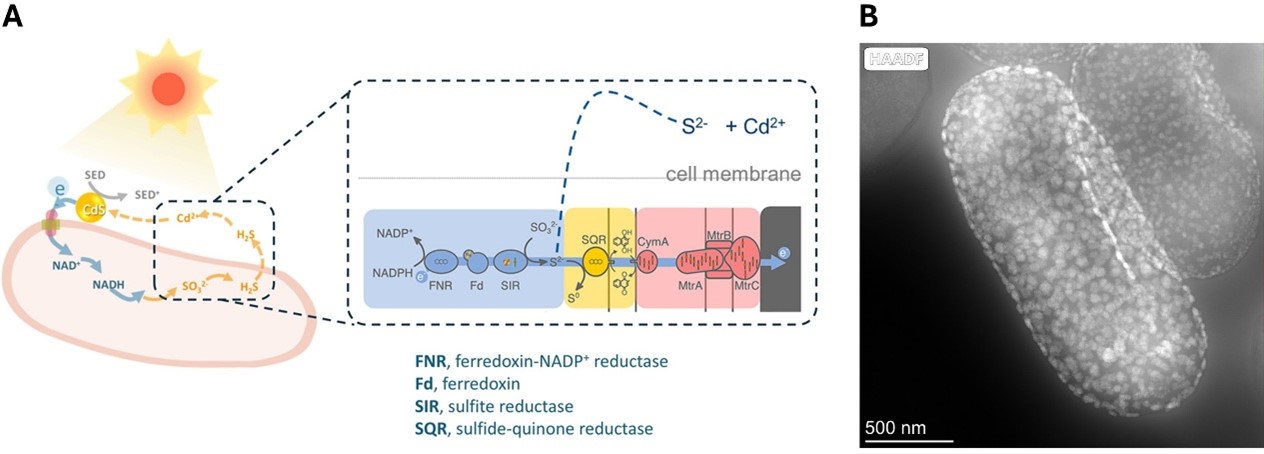
“This project takes a different approach. Instead of relying on a fixed catalyst that decays, we are engineering living bacteria to grow, wire, and repair their own light-absorbing nanoparticles. We reprogram the sulfur metabolism of E. coli so the cells build semiconductor nanoparticles on their surface and connect them, through natural electron-conducting proteins, to the machinery that makes hydrogen. When the nanoparticles degrade under strong light, the cells produce more, giving the material a self-repairing quality that conventional catalysts lack.
“Over the project, we will tune this biosynthesis for consistent particle size, replace toxic cadmium with earth-abundant iron and zinc compounds, and measure how well the system recovers hydrogen output after deliberate light damage. Our target is a living material that restores over 80% of its activity after each degradation event. Success would establish a practical route to durable, low-cost, non-toxic platforms for solar-powered hydrogen production.”
Lin Su, Queen Mary University London