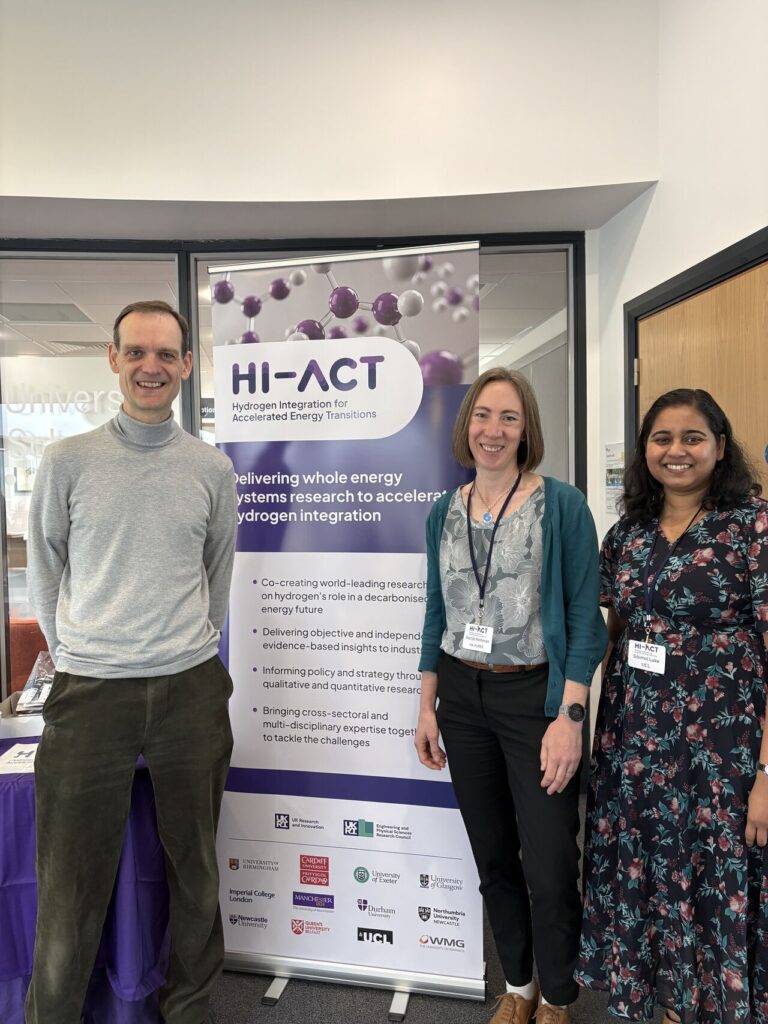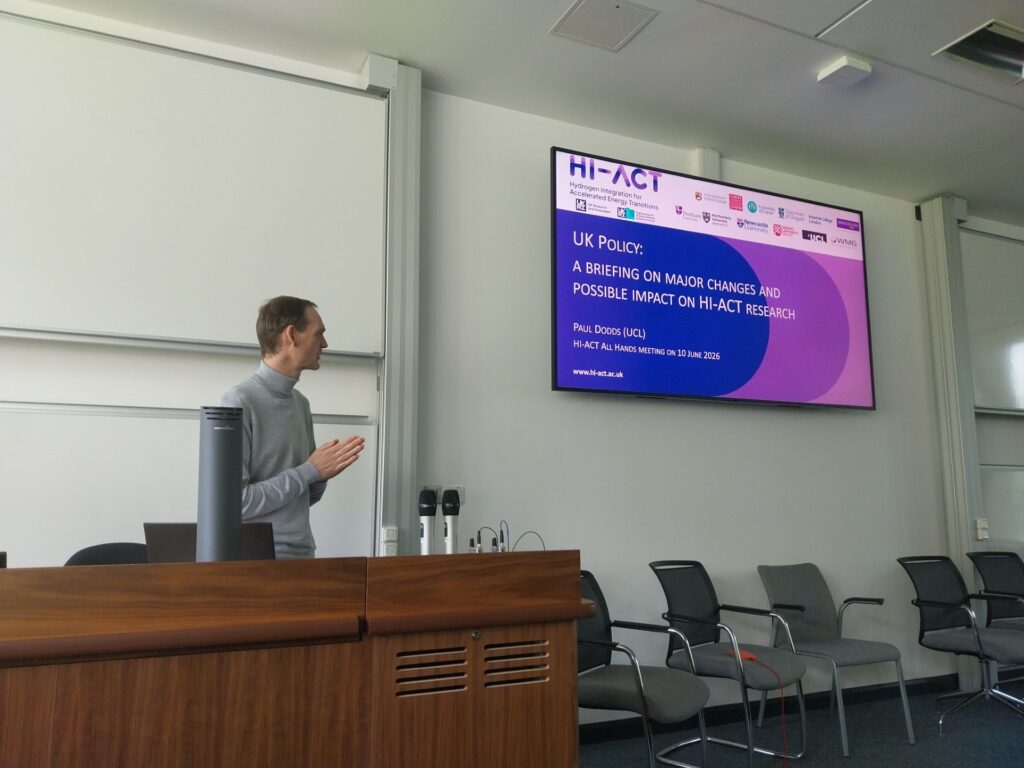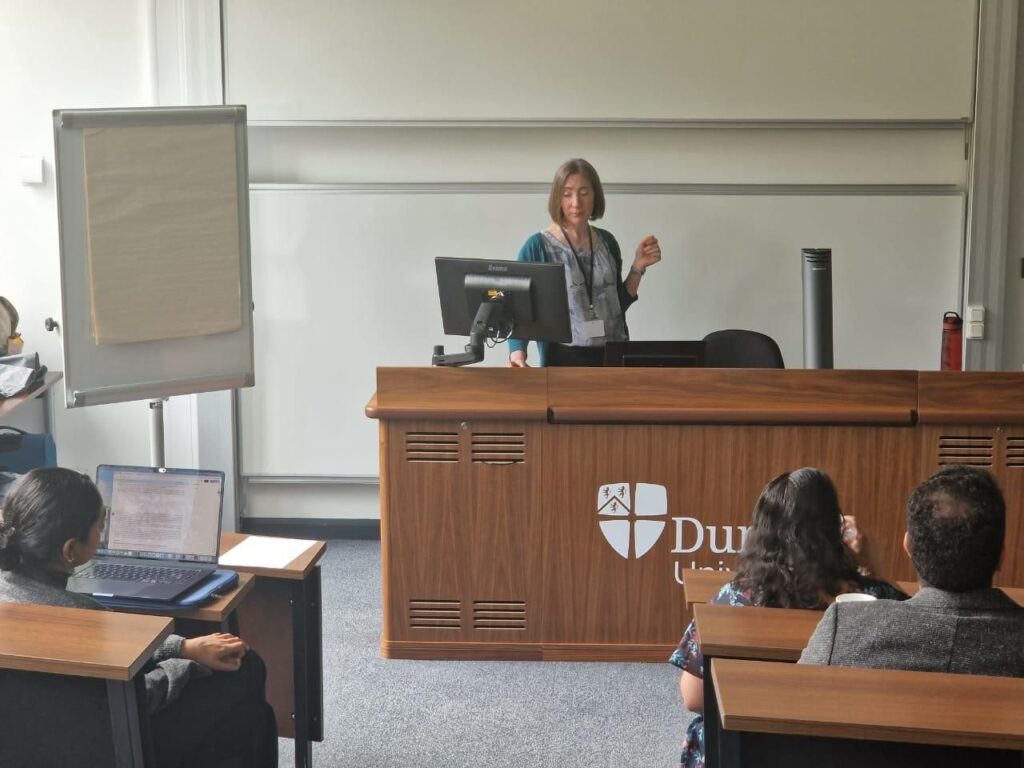
Representatives from UK-HyRES recently attended the HI-ACT All-Hands Meeting 2026 in Durham, joining colleagues from across the hydrogen research community for two days of discussions, knowledge exchange, and collaboration.
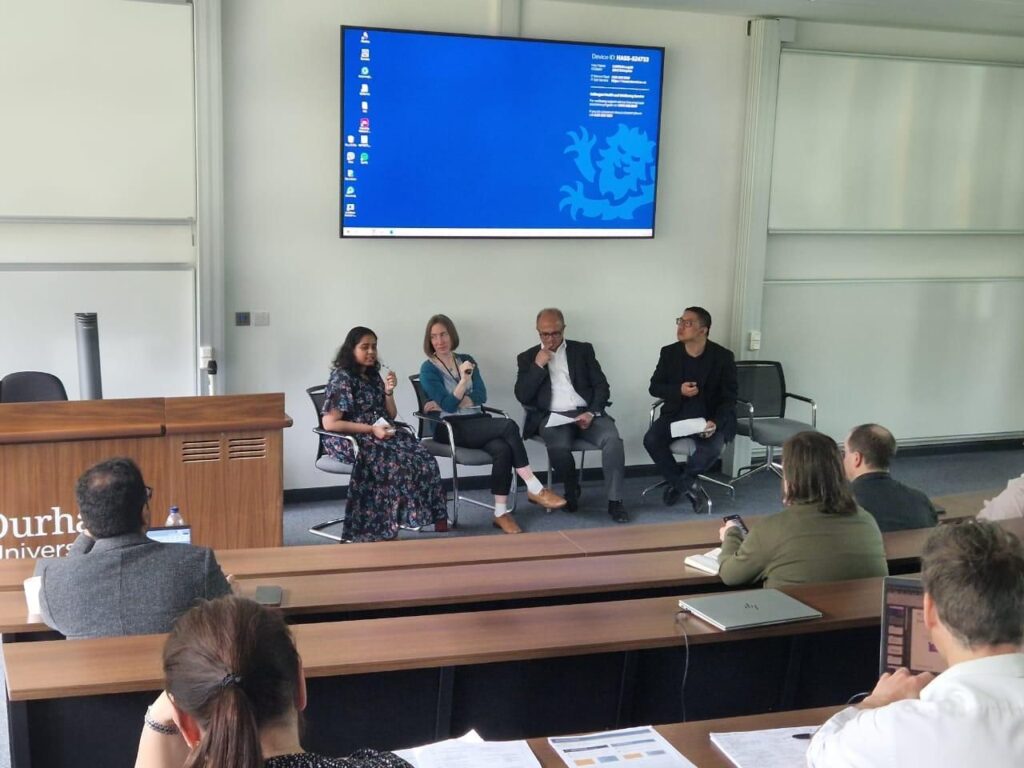
Professor Rachael Rothman, Dr Sibimol Luke, and Professor Paul Dodds represented UK-HyRES at the event, contributing to conversations on hydrogen technologies, energy systems integration, research collaboration, and the development of the next generation of hydrogen researchers.
During the meeting, Professor Rachael Rothman provided an update on the latest activities and research being undertaken across the UK-HyRES Hub, highlighting ongoing efforts to address key challenges associated with hydrogen and alternative liquid fuels. Dr Sibimol Luke also shared the progress of the rapidly growing UK-HyRES Early Career Researcher (ECR) Network, which has expanded significantly over the past year and continues to create opportunities for networking, professional development, and collaboration across the UK hydrogen research community.
Discussions throughout the event explored how UK-HyRES and HI-ACT can work more closely together to maximise the impact of hydrogen research and innovation. A joint panel discussion involving colleagues from both hubs reinforced a shared commitment to strengthening connections across hydrogen systems and technologies and fostering greater collaboration between researchers, industry partners, and stakeholders.
Professor Paul Dodds contributed insights into the evolving UK policy landscape, helping to place ongoing research activities within the broader context of national energy and decarbonisation strategies. These discussions highlighted the importance of ensuring that technological innovation is closely aligned with the practical needs of future energy systems.
A key theme emerging from the meeting was the need to consider hydrogen technologies and energy systems together. Participants emphasised that understanding hydrogen’s role in the energy transition requires consideration of the technologies that enable it—including production, storage, distribution, and end-use applications. Equally, the successful development and deployment of these technologies depends on understanding how they interact with and support the wider energy system.
The event also provided an opportunity to learn more about the breadth of research being undertaken across the HI-ACT programme, exchange ideas with researchers from different disciplines, and explore opportunities for future collaboration. Conversations covered a range of topics, including ECR engagement, research synergies, knowledge exchange, and industry partnerships.
The meeting reinforced the value of collaboration across the UK’s hydrogen research landscape and highlighted the complementary strengths of the two hubs. Building on the positive discussions in Durham, UK-HyRES and HI-ACT are looking forward to continuing these conversations through forthcoming joint activities, including a dedicated research synergies workshop aimed at identifying opportunities for future collaboration and shared impact.
Through partnerships such as these, UK-HyRES remains committed to fostering a connected and collaborative hydrogen research community capable of addressing the technical, system-level, and societal challenges associated with delivering a net-zero energy future.