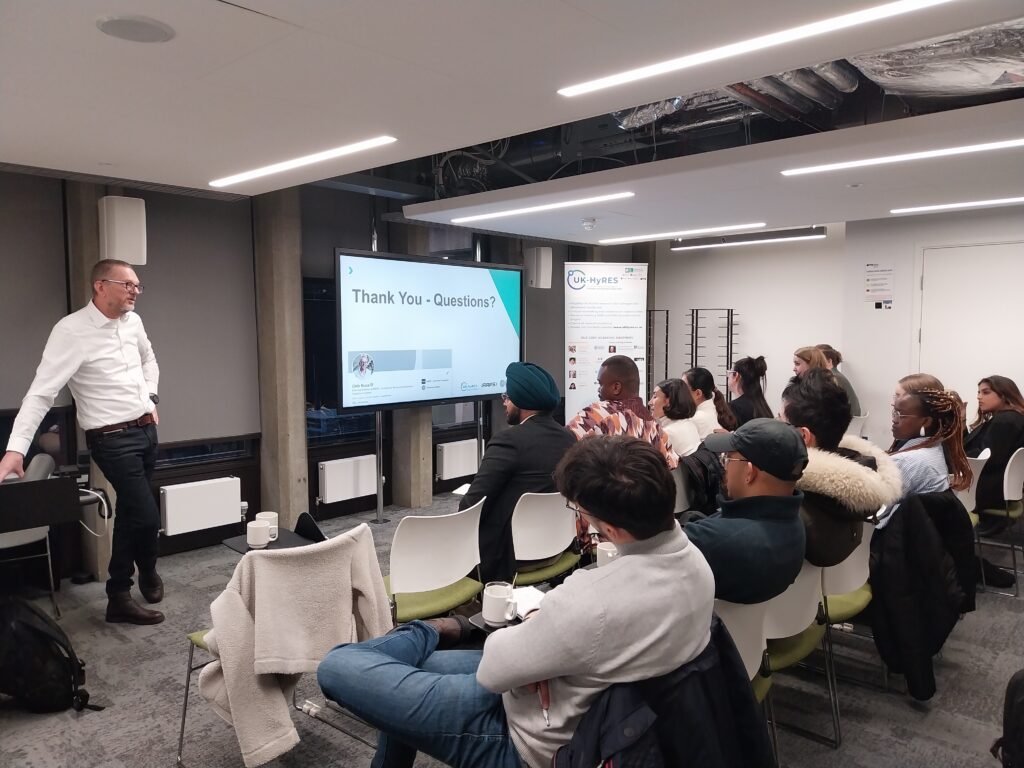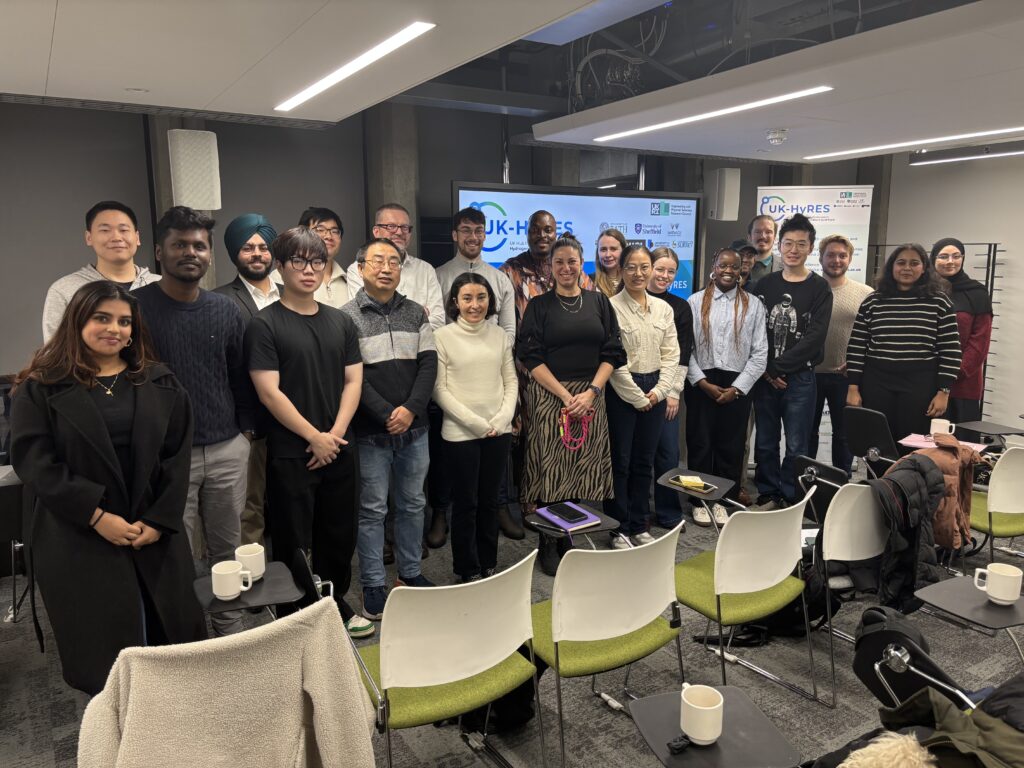
The UK-HyRES Early Career Researcher (ECR) Annual Forum 2025 was held at University College London (UCL) on 1–2 December 2025, bringing together ECRs from the UK-HyRES core universities, associated hydrogen projects, and the newly funded Flexi Fund Projects. The two-day event provided a platform for technical exchange, cross-cutting discussions, career development, and interactive networking activities, all aimed at strengthening collaboration within the UK hydrogen research community.
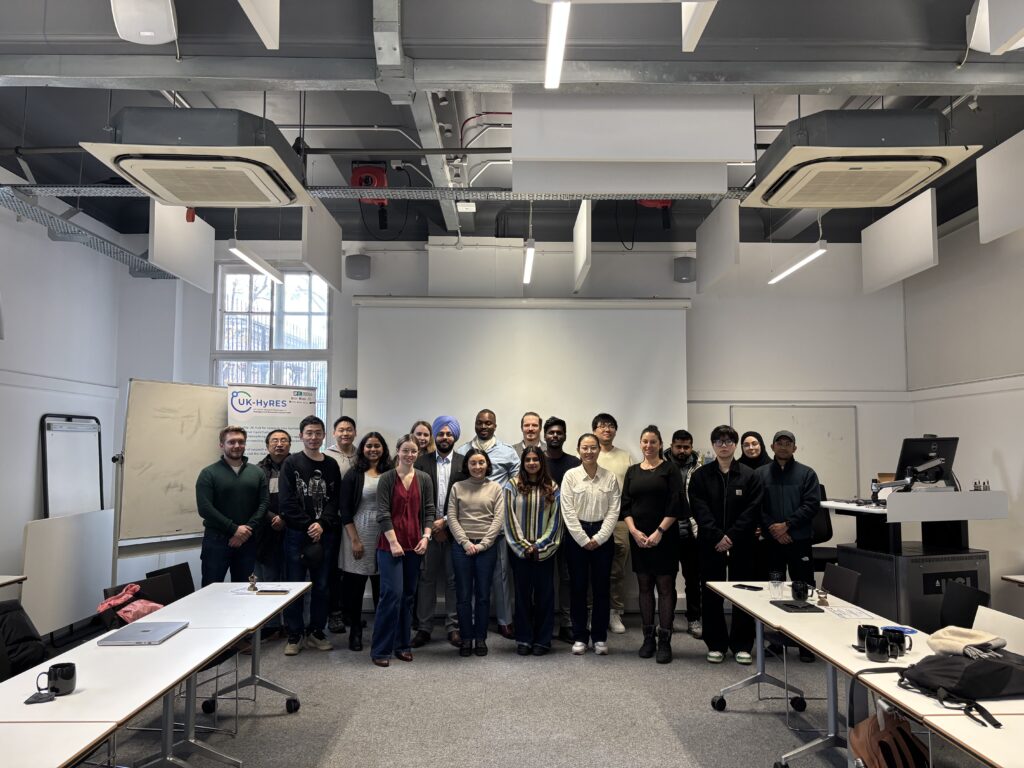
The forum began with reflections from Professor Tim Mays, Founding Director of UK-HyRES, and Professor Chris Brace, the current Director, both from the University of Bath. They shared insights into the origins, vision, and future ambitions of UK-HyRES. Dr Sibimol Luke, UCL, who currently chairs the ECR network, outlined its objectives and ongoing activities, coordinated the event overall, and led the forum.
The technical programme featured a series of expert talks addressing critical aspects of hydrogen research and its integration into industry. Professor Mojtaba Abdi Jalebi (UCL) delivered an informative presentation on strategies for scaling research into industrial applications. Professor Nilay Shah (Imperial College London) provided an engaging talk on the development and integration of E-fuels, illustrating progress through real-world test flights. Ms Polina Pencheva (UCL) examined hydrogen policy developments both in the UK and globally, highlighting evolving regulatory landscapes. Industry perspectives were shared by James McNaughton and Sachin Shaji Kumar from Hydrostar, who discussed innovative approaches to using wastewater in large-scale electrolyser systems and reflected on career pathways from academia to industry.
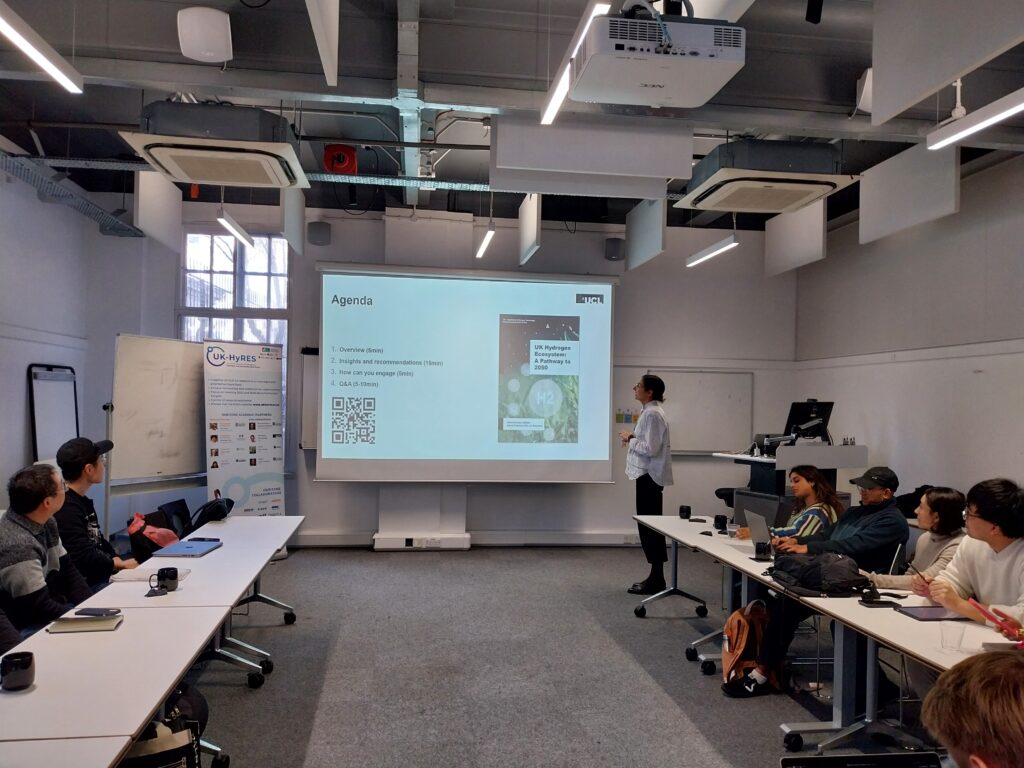
Career development formed a key component of the programme. Professor Paul Dodds (UCL) shared his academic journey and offered practical guidance on publishing research effectively. Karen Brooks (GW-Shift) facilitated an interactive workshop on crafting a compelling verbal business card, encouraging participants to articulate their research identity with clarity and confidence.
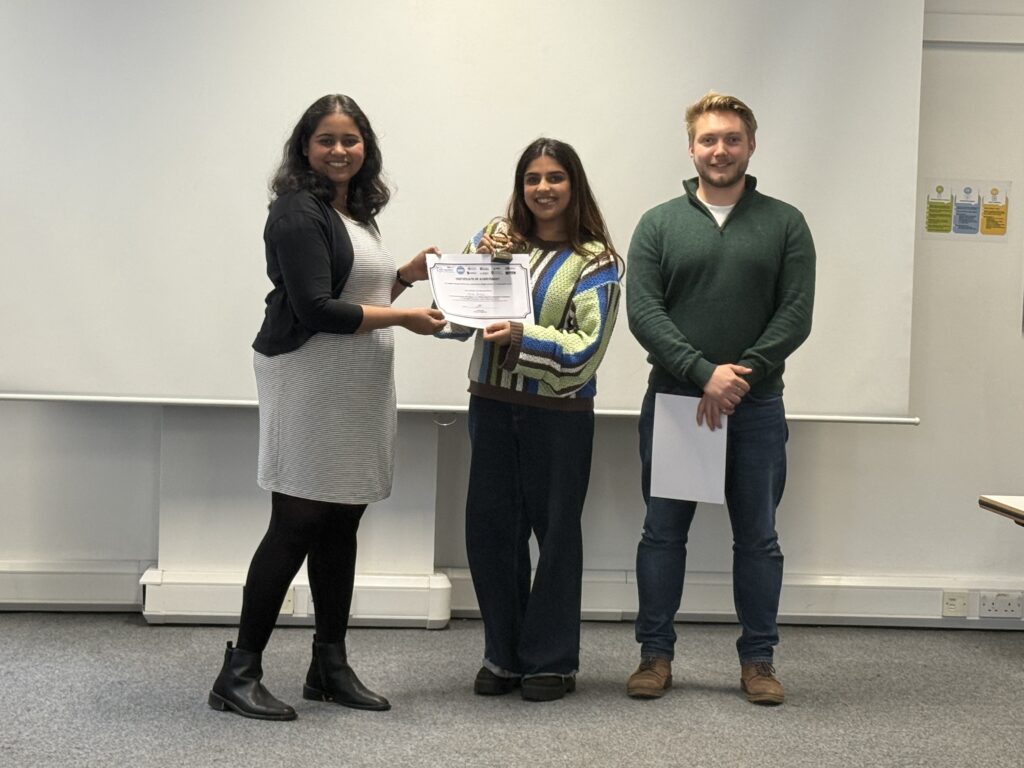
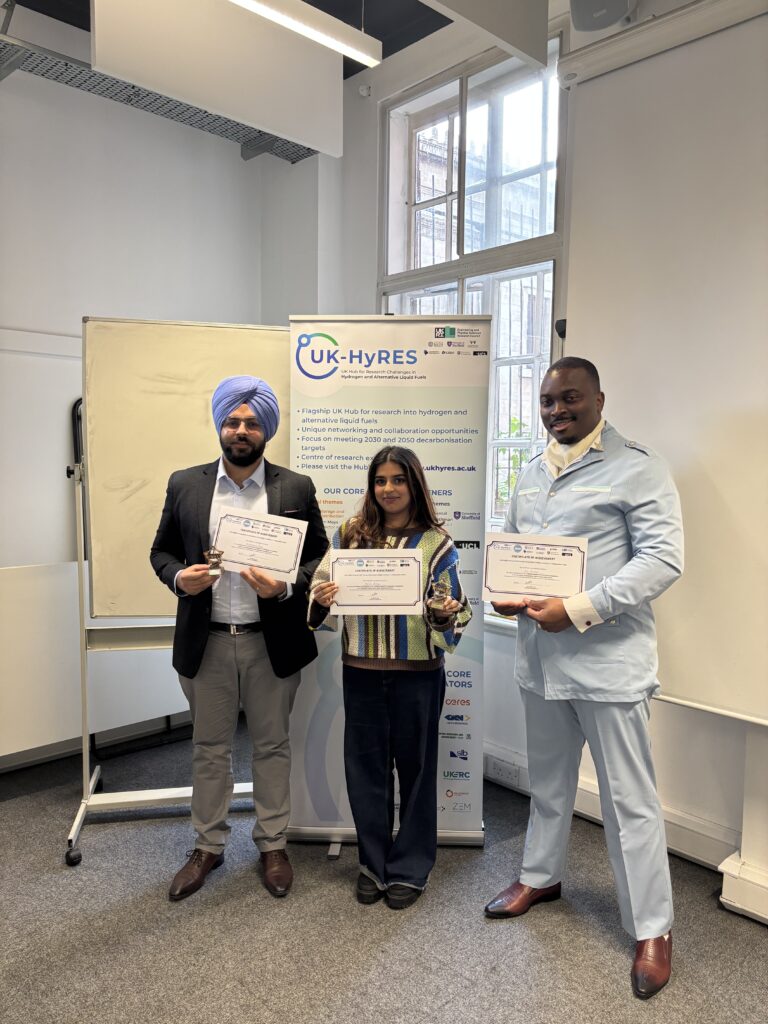
A highlight of the forum was the Three-Minute Research (3MR) competition, organised by Dr Alex Newman, Dr Chris Kim, and Dr George Neville. This activity challenged participants to present their research to a lay audience within three minutes, fostering communication skills and knowledge exchange. In the PhD category, Melisha Barboza (University of Warwick) secured first place, followed by Holly Smith (University of Bath) and Manikandan Chithravelu (University of St Andrews). In the postdoctoral category, Dr Harmanpreet Singh (University of Sheffield) won first place, while Dr Norton West (University of Manchester) and Dr Zelhia Ertekin (University of Glasgow) shared second place, and Dr Josh Kassongo (University of Sheffield) achieved third. The People’s Choice Award was presented to Dr Norton West.
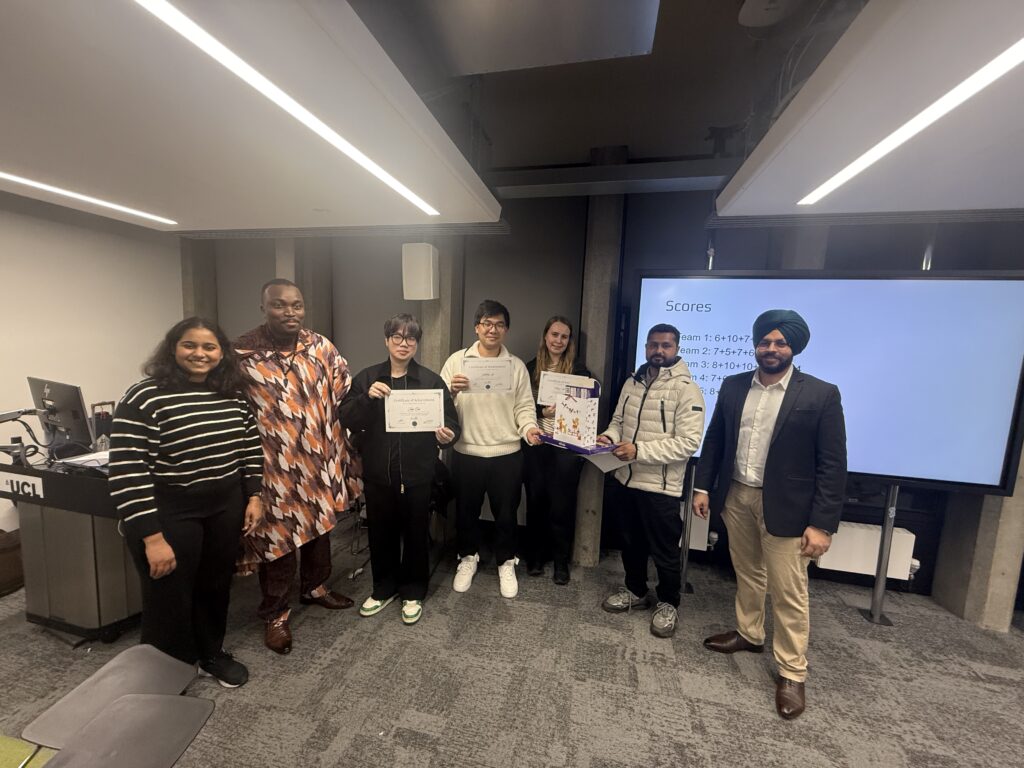
Networking activities were central to the forum’s success. An icebreaker session, organised by Dr Selda Ozkan and Dr Xiaoling Ma, paired new and existing ECRs to share their research interests and goals before introducing each other to the wider group. A hydrogen-themed quiz, coordinated by Dr Josh Kassongo and Dr Harmanpreet Singh, provided a fun and competitive team-building experience. The winning team comprised Dr Sandip Guin (University of Surrey), Dr Yuheng Liu (Imperial College London), Fiona McAllister (University of Surrey), and Jing Gui (University of Portsmouth).
The UK-HyRES ECR Annual Forum 2025 concluded with a strong sense of achievement, a time of reflection, feedback, and planning for future activities. It successfully advanced research dialogue, strengthened professional networks, and supported the development of early-career researchers across the UK hydrogen community. Its combination of expert talks, skills workshops, and collaborative activities made it a flagship event in the UK-HyRES calendar.
If you’ve been looking to collaborate with likeminded individuals, enhance your skills or develop your low-carbon or alternative liquid fuels research, the Early Careers Research Network is now open to new members. Find out more and apply here.