
The UK-HyRES Early Career Research Forum (ECR) took place on the 2nd July 2026 following the Hydrogen Industry Forum at Futures Innovation Hub in Bristol. Channelling the momentum created the day before, Early-Career Researchers (ECR) from multiple disciplines gathered to discuss their collective vision for the hydrogen and alternative liquid fuel (HALF) space and learn from senior academics about how to navigate career growth within a changing academic and industrial landscape.
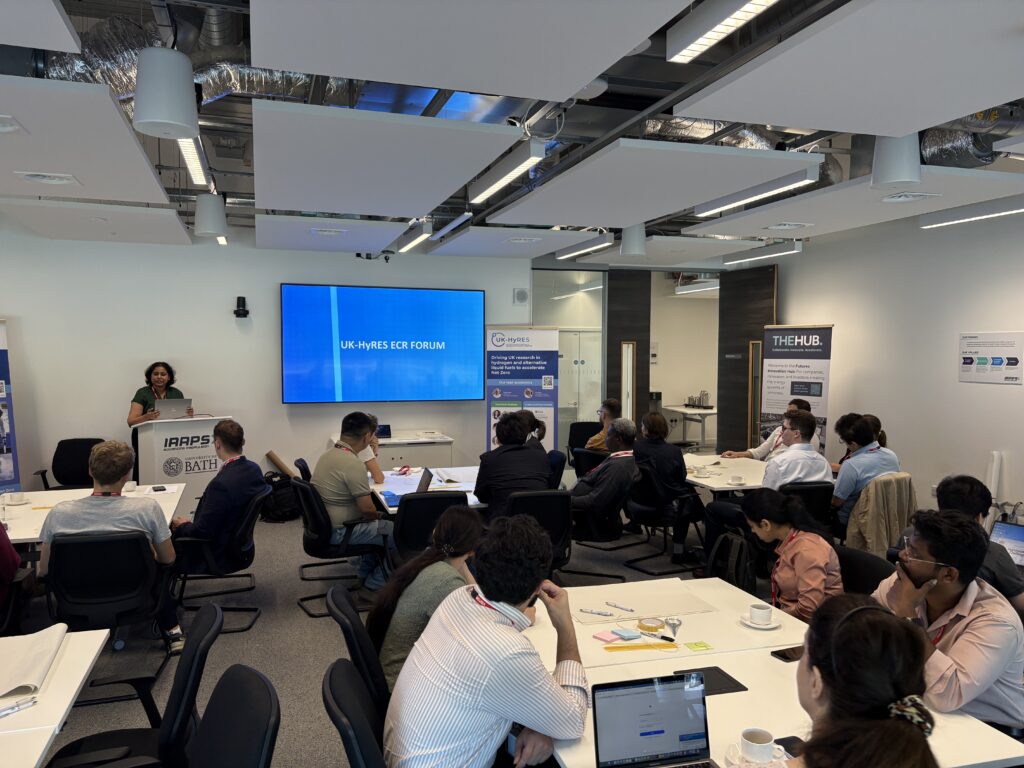
Introduction and Icebreaker
The day was formally opened by Dr Sibimol Luke, University College London and UK-HyRES ECR Chair. Dr Luke’s presentation welcomed all the ECRs to the Futures Innovation Hub, outlining the Hub’s current structure, the activities it offers, and how to become part of the network. Dr Luke particularly emphasised that the space being created is to foster strong working relationships among all ECRs working in HALF research and to discuss not only successes but also challenges we can work on as a community.
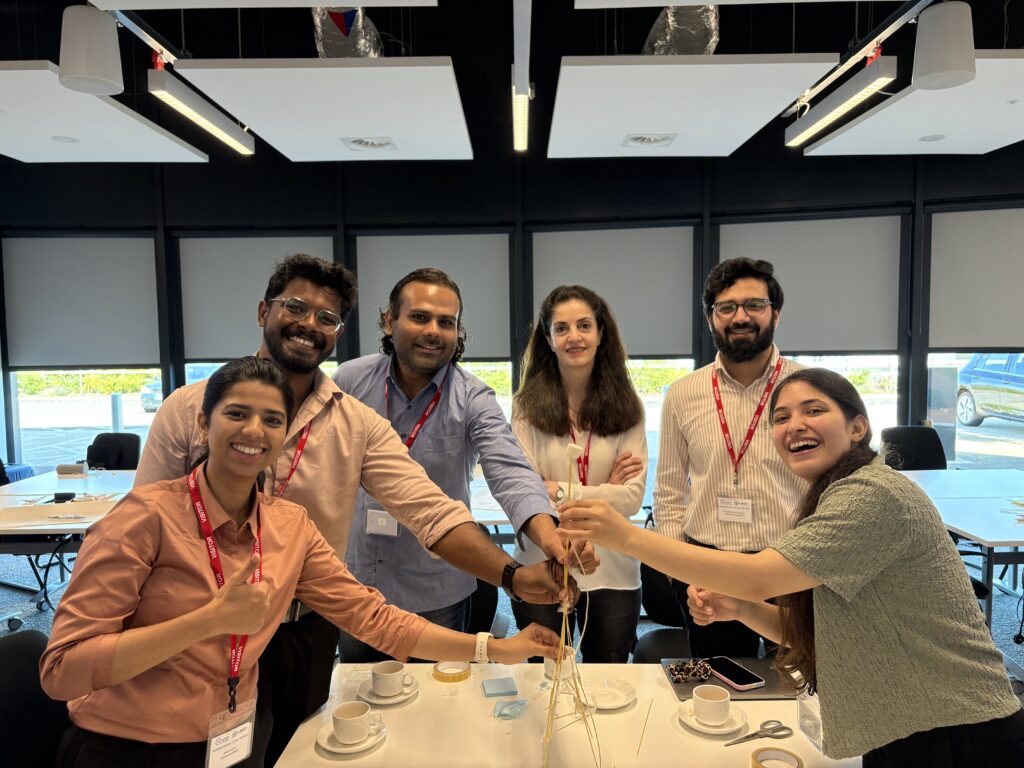
Following this, Dr Shiqi Huang, Lecturer, University of Bath, led an excellent icebreaker session, encouraging collaboration and innovation to kick-start the day. This was a fun and interactive way to break down those initial barriers between the ECRs and stimulate interaction between groups.
Career Progress Development Talk
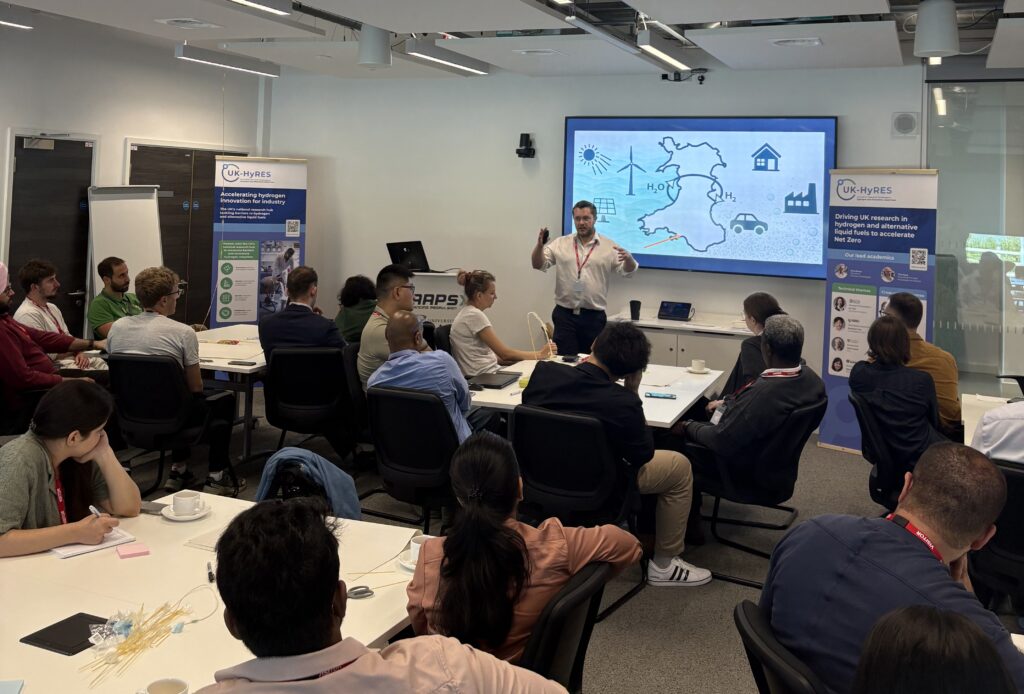
Dr James Courtney, Lecturer at Swansea University, delivered the first career development talk of the day, sharing an honest reflection on his journey across academia, industry, and entrepreneurship.
Beginning with an overview of his research into critical materials and their role across the hydrogen value chain, Dr Courtney explored how his career has developed through a combination of research, industry experience, and innovation.
After completing his first postdoctoral role, Dr Courtney took an entrepreneurial route by attempting to establish a manufacturing business, turning marine plastic waste into 3D-printed surfboards. Ultimately, due to costs and environmental benefits, he decided to step away from this venture, but highlighted how the experience provided valuable lessons that shaped his future career. He later moved into an industrial research role, working on a wide range of projects before returning to academia, where he found renewed motivation through teaching and supporting students.
Drawing on experiences including hydrogen research, policy engagement, and industry collaboration, Dr Courtney emphasised that career paths rarely follow a straight line. He encouraged ECRs to embrace opportunities, learn from setbacks, and build a career that aligns personal interests with professional goals. He also highlighted the importance of understanding funding landscapes, noting that grants and investment secured can provide a useful measure of progression across both academic and industrial careers.
Career Journey Sharing
Later, Dr Stefania Esposito, Lecturer at the University of Bath, shared her international journey into academia, reflecting on the experiences that shaped her career across Italy, Germany, and the UK.
Her journey started in Mechanical Engineering in Italy. Dr Esposito described how taking opportunities outside her comfort zone – including moving to Germany for her master’s thesis, consultancy work, and later her PhD at RWTH Aachen – helped her develop both technical expertise and personal resilience.
Alongside her research achievements, Dr Esposito reflected on the challenges of working in a male-dominated field, the importance of finding supportive mentors, and the value of building strong collaborations across cultures and disciplines.
She encouraged ECRs to consider whether opportunities align with their long-term goals, values, and personal circumstances, while recognising that confidence, resilience, and self-promotion are essential parts of building an academic career.
Research Brainstorming workshop
The afternoon began with a research brainstorming workshop in which ECRs teamed up to create a short research proposal, honing each team member’s research skills and specialities.
As individual skill sets began to gel, brainstorming turned to idea generation and final research proposals, varying from self-sustaining farms to hydrogen production on the moon. It was evident that themes from the previous day influenced the proposals across the room, incorporating elements of commercialisation to add value into the HALF chain. The workshop successfully demonstrated how diverse technical skill sets can be integrated into cohesive, innovative research initiatives.
Discussion: ECR Challenges and Solutions
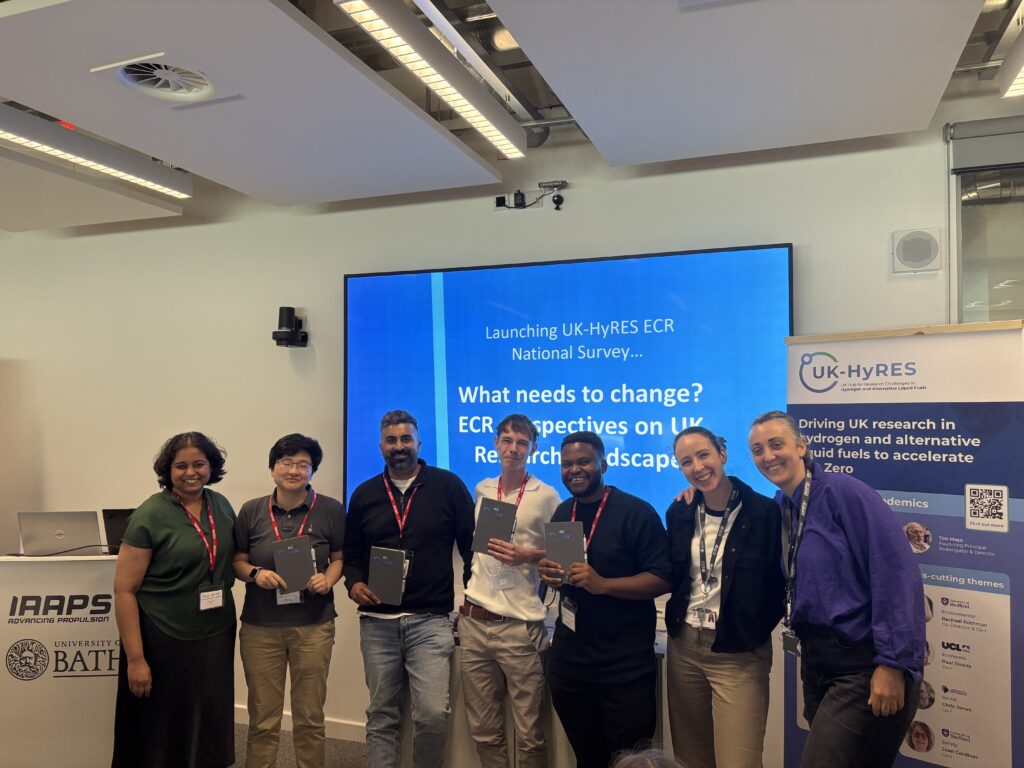
After a networking lunch, the final part of the day was devoted to the challenges currently faced by ECRs. Collaboration was in full effect once again as groups discussed the issues faced from PhD to postdoctoral level and beyond. The challenges span day-to-day issues, such as equipment and chemical orders, to widespread issues that affect entire research communities, such as the contract length of post-doctorates, how childcare and maternity leave influence female researchers, and the allocation of funds for researchers.
The Early Career Researcher Day was a testament to the power of collaboration in tackling the challenges and maximising the opportunities across the HALF space. The day fostered a strong sense of community among attendees and effectively equipped them for their future professional endeavours.
Spaces where ECRs can share their concerns are pivotal for growth, and we hope to have more opportunities to collaborate, tackle challenges, and progress innovation across the HALF space.
Share your experiences, challenges, and priorities within the UK research landscape in our ECR Survey. Click the button below to have your say.