
Overview
Hydrogen and alternative fuels are most likely to add value where direct electrification is difficult, including high-temperature industry, chemical processing and parts of heavy transport. UK-HyRES examines their use in iron and steel, cement, shipping, aviation and heavy vehicles. Research covers reaction kinetics, catalysis, combustion, fuel cells, materials behaviour and integrated system performance. The work also considers emissions, contaminants, degradation, fuel quality and losses across the full energy chain. Its purpose is to establish where hydrogen or an alternative fuel offers a credible advantage, what technology is needed, and where another route may be more suitable.
Key research questions
- Where can hydrogen or an alternative fuel outperform direct electrification or other decarbonisation routes?
- How can hydrogen and ammonia be converted efficiently while controlling nitrogen oxides, unburned fuel and other emissions?
- How do contaminants, materials behaviour and operating conditions affect performance and durability?
- What sensing and monitoring capabilities are needed for reliable use in demanding industrial and transport settings?
Core research project
PT3.1 – Low cost and durable catalysts for zero-emission hydrogen and ammonia combustion
Core project | Theme lead: Professor Qiong Cai, University of Surrey | Lead researcher: Dr Emre Kılıç
This core project is developing durable, lower-cost catalysts to manage emissions associated with hydrogen and ammonia use. The research focuses on converting nitrogen oxides and residual ammonia into nitrogen under a range of operating conditions, alongside catalyst development for ammonia cracking. Experimental testing, advanced characterisation and modelling are being used to understand reaction mechanisms and design catalysts that remain effective over time. Supported by Johnson Matthey, SLB and Fluor, the work addresses a central deployment challenge: enabling hydrogen- and ammonia-based energy systems to deliver useful performance without creating unacceptable emissions.

Flexible Fund projects
0 1
FF8 – MARIO – Multi-purpose exploration of Ammonia Reduction of Iron Oxides to enable green steel and high-purity hydrogen supply (MARIO)
Flexible Fund 1 | Professor Aidong Yang, University of Oxford
MARIO investigates whether ammonia can reduce iron oxides to support lower-carbon steel production while also generating a high-purity hydrogen stream. The project brings together industrial decarbonisation and hydrogen supply, testing whether one process can create value across two difficult-to-decarbonise needs.
0 2
FF10 – OptiSen – Novel low-cost, high-performance opto-chemical hydrogen sensors
Flexible Fund 1 | Professor Gerard Fernando, University of Birmingham
OptiSen is developing optical-chemical sensors for detecting hydrogen. The research aims to combine sensitivity, speed and lower cost, supporting safer monitoring across hydrogen production, storage, distribution and end-use environments.
0 3
FF19 – CryoSpect – Fluorescent polymer coatings for liquid-hydrogen systems
ECR Fellowship | Dr George Neville, University of Bath
CryoSpect is developing fluorescent polymer coatings that could provide real-time information about liquid-hydrogen systems. The approach could support monitoring of cryogenic conditions, leaks or material changes, helping operators manage demanding storage and end-use environments more safely and effectively.
0 4
FF17 – Energy-efficient hydrogen purification
SPRINT | Shiqi Huang, University of Bath | Associated themes: Production, Storage and End Use
This SPRINT project is developing atomically thin membranes with very high densities of nanoscale pores to separate hydrogen more efficiently. The work aims to create a faster, scalable way to engineer the pores needed for high-purity hydrogen, potentially reducing the energy required and cost efficiency of purification compared with conventional methods. The research could support applications where very pure hydrogen is essential, including liquid-hydrogen production and ammonia synthesis.
What this portfolio enables
The End Use portfolio tests hydrogen and alternative fuels in the settings where their value must ultimately be demonstrated: industrial processes, heat, transport and operational systems. By combining conversion science, emissions control, sensing and materials monitoring, the research helps identify both credible applications and the practical conditions that must be met before deployment makes sense.
Other technical themes
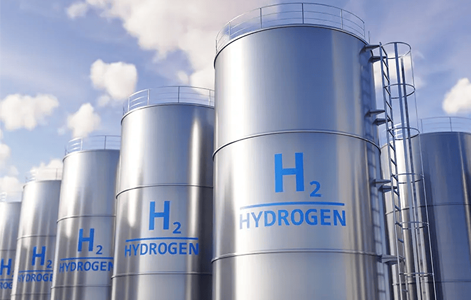
Production
Low-carbon hydrogen will only be commercially viable at scale if it can be produced efficiently, reliably and at an acceptable cost.
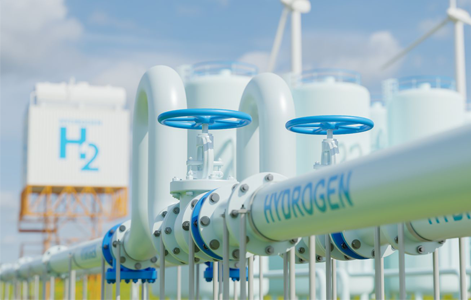
Storage & Distribution
Hydrogen has a high energy content by mass but a low energy density by volume under ambient conditions. Exploring different methods and materials to maximise the energy and storage and transport options can ensure hydrogen as an energy vector to meet low carbon energy system needs.
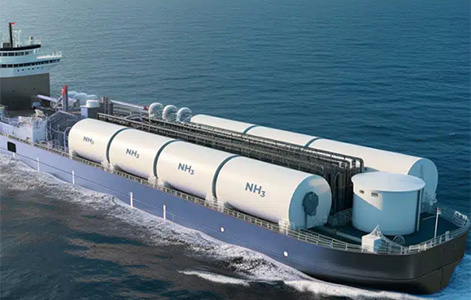
Alternative Liquid Fuels
Converting hydrogen into an energy-rich liquid or chemical can make it easier to store, transport or use so widening the applications for hydrogen across a number of sectors.