
Overview
Low-carbon hydrogen will only be useful at scale if it can be produced efficiently, reliably and at an acceptable cost. UK-HyRES studies the materials, components and operating strategies that determine electrolyser performance. Research covers alkaline, polymer-electrolyte and high-temperature systems, alongside emerging production routes. The work addresses catalyst activity, electrode durability, critical-material use, manufacturing and operation with variable power input. Production is considered as part of a wider energy system, linking electrochemical performance with electricity supply, water use, storage, infrastructure and demand.
Key research questions
- How can electrolysers deliver high performance while reducing reliance on scarce or expensive materials?
- What causes catalysts, electrodes and interfaces to degrade, and how can useful operating life be extended?
- How can production technologies operate effectively with variable renewable electricity and challenging water sources?
- Which emerging production routes offer meaningful system-level value rather than laboratory performance alone?
Core research project
PT1.1 – Functional electrolysis electrodes
Core project | Theme lead: Professor John Irvine, University of St Andrews | Lead researcher: Dr Selda Özkan
This core project is developing electrode materials for low-temperature water electrolysis, building on advances in exsolution catalysts first demonstrated in high-temperature systems. The research focuses on catalysts that combine activity, conductivity and stability for both hydrogen and oxygen production, while reducing dependence on precious materials. It also explores how catalyst materials can be deposited onto practical supports and integrated more effectively with ion-exchange membranes. By connecting materials discovery with testing in real electrolyser configurations, the project aims to improve durability and performance and support more scalable routes to low-carbon hydrogen production.
Flexible Fund projects
0 1
FF5 – Understanding synergistic effects in iridium-free bimetallic oxide electrocatalysts
Flexible Fund 1 | Professor Alex Walton, University of Manchester
This project investigates how two metals can work together in oxide electrocatalysts to deliver strong performance without relying on iridium. By identifying the interactions that control activity and stability, the research could inform more abundant and potentially lower-cost catalyst options for water electrolysis.
0 2
FF7 – Mitigating degradation and enhancing durability in metal-supported solid oxide electrolysers
Flexible Fund 1 | Professor Stephen Skinner, Imperial College London
This project examines the mechanisms that cause metal-supported solid oxide electrolysers to lose performance over time. The work aims to identify practical ways to reduce degradation and extend durability, helping high-temperature electrolysis move towards robust operation at larger scale.
0 3
FF1 – STACI – Stabilizing the AEM–Catalyst Interface
Flexible Fund 1 | Professor Alex Cowan, University of Liverpool
STACI focuses on the critical interface between an anion-exchange membrane and its catalyst layer. Understanding and stabilising this interface could reduce performance losses and improve the operating life of anion-exchange membrane electrolysers, strengthening a technology route that may use fewer scarce materials.
0 4
FF9 – Decoupled Electrolysis of Seawater
Flexible Fund 1 | Professor Mark Symes, University of Glasgow
This project explores a decoupled approach to seawater electrolysis, separating reaction steps that are normally forced to occur together. The work will test whether this can avoid unwanted side reactions and make less-purified water sources more practical for hydrogen production.
0 5
FF12 – Living Semiconductors for Green Hydrogen
SPRINT | Dr Lin Su, Queen Mary University of London
This project investigates engineered bio-abiotic interfaces that can biosynthesise and regenerate semiconductor nanoparticles. The approach could create catalytic materials that renew themselves during operation, opening a novel route to more resilient green-hydrogen production.
0 6
FF11 – Tracking Electrochemical Degradation in PEM Water Electrolysers
SPRINT | Dr Connor Sherwin, University of Oxford
This project will track how materials and interfaces change as proton-exchange-membrane water electrolysers operate. Better evidence on where and how degradation begins can support more targeted materials design, testing and maintenance strategies.
0 7
FF18 – Next-Generation Green Methanol: Enhancing Biogas Conversion through Solid Oxide Cells
SPRINT | Dr Shu Wang, University of St Andrews
This project investigates how solid oxide cells can improve the conversion of biogas into lower-carbon methanol. It connects hydrogen-production research with a valuable liquid-fuel pathway, exploring whether electrochemical integration can improve efficiency and use renewable carbon more effectively.
What this portfolio enables
Together, the Production portfolio links catalyst discovery, electrode and interface design, degradation science and emerging production routes. This breadth helps researchers and industry compare options on more than peak performance alone. It builds evidence about durability, material availability, operating conditions and integration with wider energy and resource systems – the factors that will ultimately determine which production technologies can create commercial value at scale.
Other technical themes
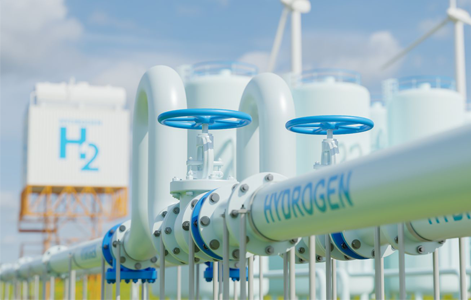
Storage & Distribution
Hydrogen has a high energy content by mass but a low energy density by volume under ambient conditions. Exploring different methods and materials to maximise the energy and storage and transport options can ensure hydrogen as an energy vector to meet low carbon energy system needs.
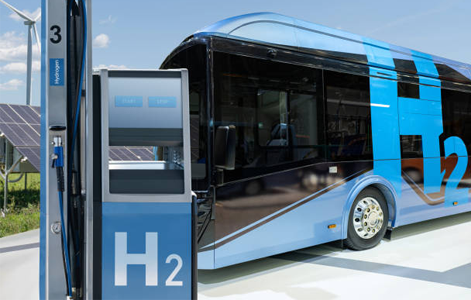
End Use
Hydrogen and alternative fuels are most likely to add value where direct electrification is difficult, such as for heavy machinery, high energy industries like glass and steel manufacture or longer distance transportation.
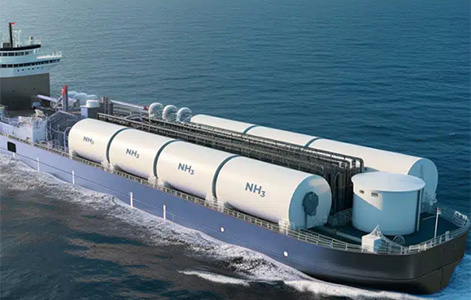
Alternative Liquid Fuels
Converting hydrogen into an energy-rich liquid or chemical can make it easier to store, transport or use so widening the applications for hydrogen across a number of sectors.