
Overview
Hydrogen has a high energy content by mass but a low energy density by volume under ambient conditions. Storing and moving it therefore requires compression, liquefaction, containment in another material or molecule, or large-scale geological storage. UK-HyRES studies porous materials, chemical carriers, high-pressure and liquid-hydrogen systems, containment, thermal management, pipelines and underground storage. There is no single best solution. The right choice depends on scale, storage duration, transport distance and end use. Our research provides the evidence needed to compare options and design storage and distribution as part of a low carbon energy system.
Key research questions
- How can hydrogen be stored at useful density with lower energy, material and safety penalties?
- Which storage route is best suited to a particular duration, scale, transport distance or end use?
- How do hydrogen’s physical behaviour and interactions with materials affect performance and containment?
- What monitoring, thermal-management and infrastructure capabilities are needed for safe, reliable operation?
Core research project
PT2.1 – Nanoporous materials and composites for hydrogen storage in future aircraft
Core project | Theme lead: Professor Mi Tian, University of Bath | Lead researcher: Dr Raj Jagpal
This five-year core project is discovering, designing, modelling and characterising novel nanoporous materials and composites for hydrogen storage in future aircraft. The research examines how hydrogen behaves within nanoscale pores and how promising material performance can be translated into practical storage systems. By combining fundamental materials research with testing, modelling and industry collaboration, the project is building the evidence needed to assess compact hydrogen storage for low-carbon aviation and compare it with other storage routes.

Flexible Fund projects
0 1
FF6 – MHYSTIC – New materials and methods for hydrogen transportation and storage
Flexible Fund 1 | Professor Alfonso Martinez-Felipe, University of Aberdeen
MHYSTIC explores new materials and methods for transporting and storing hydrogen, with a focus on how existing North Sea assets and capabilities might be repurposed. The project considers how materials innovation could support a future hydrogen economy while making productive use of established regional infrastructure and expertise.
0 2
FF14 – Nanoconfined Reactive Hydrides for Advanced Solid-State Hydrogen Storage
SPRINT | Dr Luke Woodliffe, University of Nottingham
This project investigates reactive hydrides confined within nanoscale structures. Confinement may change how quickly and reversibly these materials absorb and release hydrogen, helping assess whether solid-state storage can offer useful capacity under more practical conditions.
0 3
FF15 – HySPIN – Spin-Isomer and Adsorption Interactions in Hydrogen Systems
SPRINT | Dr Rajan Jagpal, University of Bath
HySPIN examines how hydrogen’s spin isomers interact with adsorption materials. Understanding these effects could improve the interpretation of storage measurements and reveal new ways to influence hydrogen uptake, release and thermal behaviour in porous systems.
0 4
FF21 – Magnetic Induction Heating for Rapid, Safe and Energy-Efficient Hydrogen Storage
ECR Fellowship | Dr Luke Woodliffe, University of Nottingham | Associated themes: End Use, Alternative Liquid Fuels, Economic, Environmental
This project investigates magnetic induction heating as a controlled way to release hydrogen from storage materials. Faster and more targeted heating could improve system responsiveness and energy efficiency, creating a direct connection between storage technology and the performance required at the point of use.
0 5
FF16 – Defect-Tuned Plasma Electrolytic Oxidation (PEO) in Hydrogen Charged Environment, Open New Path for Hydrogen Valves
SPRINT | Sepideh Aliasghari, University of Manchester
This project investigates how hydrogen exposure affects plasma electrolytic oxidation (PEO) coatings used on lightweight alloys for components such as hydrogen valves. By combining advanced nanoscale imaging and chemical analysis, the research will examine how hydrogen interacts with defects and changes within the coating, helping identify more resilient coating designs and support safer, lighter hydrogen storage and delivery systems.
What this portfolio enables
The portfolio combines fundamental understanding of hydrogen–material interactions with work on containment, carriers, infrastructure and practical applications. This helps move the conversation from a search for one universal storage solution towards evidence-led selection: matching storage and distribution technologies to the scale, duration, location and final use where they can deliver the most value.
Other technical themes
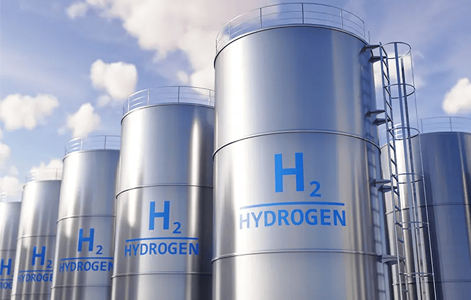
Production
Low-carbon hydrogen will only be commercially viable at scale if it can be produced efficiently, reliably and at an acceptable cost.
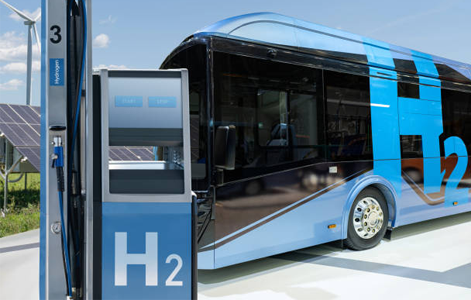
End Use
Hydrogen and alternative fuels are most likely to add value where direct electrification is difficult, such as for heavy machinery, high energy industries like glass and steel manufacture or longer distance transportation.
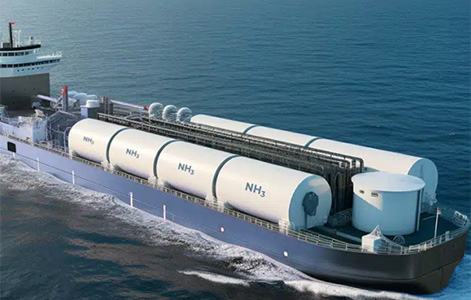
Alternative Liquid Fuels
Converting hydrogen into an energy-rich liquid or chemical can make it easier to store, transport or use so widening the applications for hydrogen across a number of sectors.